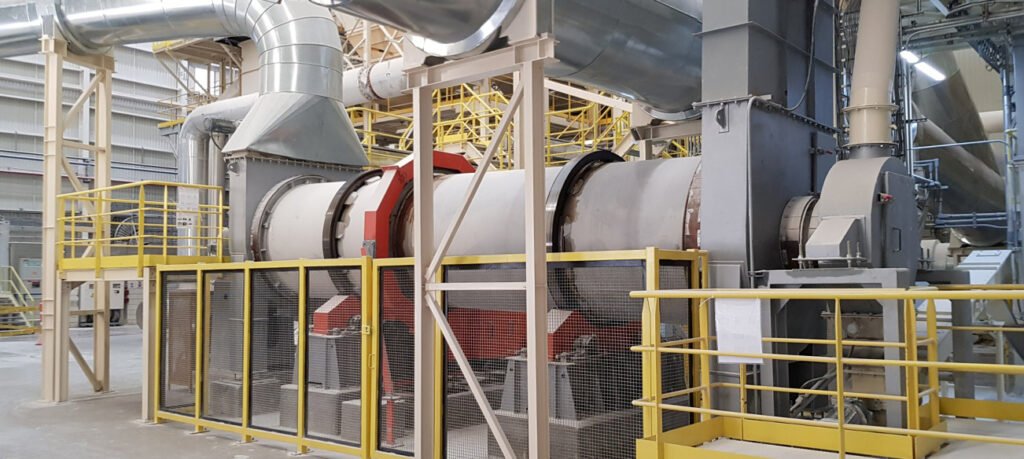
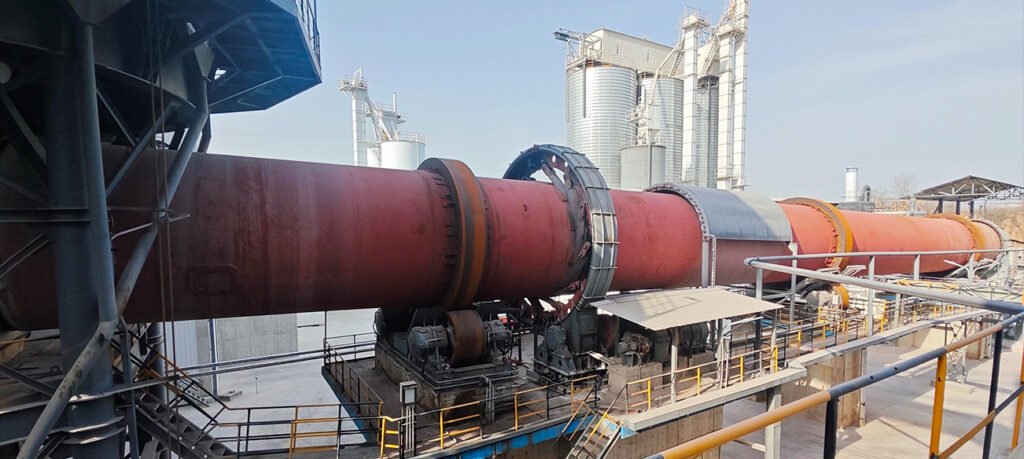
Whether you are planning to purchase a cement rotary kiln, establishing a brand-new cement plant, or looking to upgrade an existing production line, the rotary kiln invariably remains the very core of your entire production operation. Should this critical component falter, you would face a series of formidable challenges—ranging from fluctuating clinker quality and skyrocketing energy costs to significant profit losses resulting from unexpected downtime.
For over three decades, CHUNLEI has dedicated itself to the design and R&D of cement rotary kilns. We are committed to crafting specialized equipment specifically engineered for clinker production, with a relentless focus on refining equipment stability, energy efficiency, and the flexibility for personalized customization. In this guide, we will provide a detailed breakdown of the unique advantages and key highlights of CHUNLEI rotary kilns; share the technical specifications of our flagship products—each meticulously tailored to meet the practical demands of cement plants; and demonstrate how we can deliver a comprehensive, “turnkey” clinker production solution that is truly aligned with your specific requirements.
Why Choose Chunlei for Clinker Production? Three Core Advantages
1. Reliable Stability: Ensuring Consistent Clinker Quality The key to high-quality clinker lies in temperature constancy (1450°C being the ideal optimal point) and heating uniformity. Our rotary kilns feature a “Three-Zone Design” (Preheating → Calcining → Cooling), complemented by a precision temperature control system capable of precisely limiting temperature fluctuations to an extremely narrow range of ±5°C. This means you can permanently bid farewell to the dilemmas of low clinker strength caused by under-calcining, or energy waste resulting from over-calcining.
2. 15% Energy Savings Fuel costs account for as much as 60% of the total operating expenses in cement production. Chunlei’s rotary kilns utilize an optimized thermal insulation layer design and are equipped with high-efficiency, energy-saving burners, reducing heat loss by over 40%. Compared to traditional rotary kilns, our equipment has been empirically proven to reduce energy consumption by 15%. For a cement plant with an annual capacity of 200,000 tons, this translates to annual fuel cost savings of over $500,000.
3. Comprehensive Customization Services No two cement plants are exactly alike. Whether you require a small-scale rotary kiln with an annual capacity of 50,000 tons or a large-scale production line capable of up to 1 million tons per year, we can tailor every technical parameter to your specific site conditions:
Kiln size (diameter × length)
Fuel type (coal, natural gas, LPG, electric)
Output capacity
Local emission standards
We also pair the kiln with jaw crushers, ball mills, and dust collectors to create a one-stop EPC clinker production line—no more juggling multiple suppliers.
Top Cement Rotary Kiln Models (Customizable for Clinker Production)
Model
Size (Diameter × Length)
Annual Clinker Output
Core Parameters
Fuel Compatibility
Key Features
CL-CK2540
Φ2.5×40m
50,000–80,000 tons
Motor Power: 55kW; Rotation Speed: 0.44–2.44 r/min
Coal, Gas, Diesel
Ideal for small cement plants; easy to install and maintain
CL-CK3250
Φ3.2×50m
200,000–300,000 tons
Motor Power: 125kW; Effective Volume: 292m³
Coal, Natural Gas, LPG
Most popular model; 15% energy saving; meets EU/US emission standards
CL-CK4060
Φ4.0×60m
500,000–600,000 tons
Motor Power: 200kW; L/D Ratio: 15
Multi-fuel (coal/gas/oil)
Large-scale clinker production; intelligent flue gas control
CL-CK4872
Φ4.8×72m
800,000–1,000,000 tons
Motor Power: 315kW; Design Temp: 1350℃
Coal, Natural Gas
For mega cement plants; paired with complete EPC production line
Note: All models support custom output adjustments. For example, we can tweak the Φ3.2×50m kiln to hit 250,000 tons/year if you need extra capacity.
How We Deliver a “Complete Solution” for Clinker Production
It’s not just about selling a kiln—we handle the entire process to make your clinker production line run smoothly:
Pre-Sales: Custom Design & Feasibility Check
Our engineers will visit your site (or review your plans remotely) to:
Provide a detailed cost estimate with no hidden fees
Calculate the exact kiln size based on your daily output target
We build every kiln in our 20,000㎡ factory using high-strength steel plates and premium refractory bricks (service life up to 15 years). Each unit undergoes 72 hours of test running before shipping to ensure no defects.
Post-Sales: EPC Installation & Training
We don’t leave you hanging—our global team provides:
On-site installation and commissioning (within 15 days of arrival)
Operator training (teach your team to run, maintain, and troubleshoot)
24/7 online support for emergency issues
Spare parts supply (fast delivery to over 100 countries)
Real-World Case: A Cement Plant’s Success Story
A cement plant in Africa approached us looking to upgrade from a used kiln to a more efficient solution. They needed a 200,000 tons/year clinker production line that could meet local emission standards and cut costs.
We recommended our CL-CK3250 cement rotary kiln and paired it with a jaw crusher (PE600×900) and ball mill (Φ2.2×7m) for a complete EPC line. Here’s what happened after 6 months of operation:
Clinker qualification rate: 99.8% (up from 92% with the old kiln)
Energy cost reduction: 16.3% (exceeding our 15% promise)
Annual profit increase: Over $600,000 (from lower fuel costs and higher-quality output)
The plant owner said: “Chunlei’s kiln changed everything—we no longer worry about clinker quality or unexpected breakdowns. It’s the best investment we’ve made.”
If you’re ready to build a stable, efficient cement plant or upgrade your existing clinker line, Chunlei’s cement rotary kiln is the right choice. We’ll handle every detail—from design to installation—so you can focus on growing your business.
When selecting a rotary kiln, many customers view it simply as a large heating cylinder without fully understanding its operating mechanism. In reality, the basic principle is straightforward.Raw materials enter the kiln at the higher end, while ...
Choosing the right rotary kiln is the foundation of a successful calcination project—whether you’re processing mining ores, cement clinker, lime, or alumina, the wrong kiln type can lead to low production efficiency, high energy waste, frequent e...
Sand is a fine-grained material of small minerals or rock fragments, mainly formed by rock weathering or mineral fragmentation, with grain sizes usually ranging from 0.0625 mm to 2 mm (according to the international standard ISO 14688). Sand can...
At present, the contradiction between industrial production and environmental pollution is becoming more and more prominent, and smelting industry has become one of the main sources of pollution. In order to improve people's living environment, t...
 Chunlei Rotary kiln