Please search Product Other Equipments Related Products

How to Choose the Right Rotary Kiln for Your Calcination Project

News 5990

Choosing the right rotary kiln is the foundation of a successful calcination project—whether you’re processing mining ores, cement clinker, lime, or alumina, the wrong kiln type can lead to low production efficiency, high energy waste, frequent equipment failures, and even lost profits. As a 30-year professional rotary kiln manufacturer with 1000+ global project experience, Chunlei Machinery will break down the core steps and key factors of rotary kiln selection, helping you avoid mistakes and choose a cost-effective, high-efficiency rotary kiln that fits your project needs.

Many enterprises make the same mistake: focusing only on price or brand, ignoring the matching degree between the kiln and their specific calcination scenarios. In fact, a rotary kiln that works for a cement plant may not be suitable for a bauxite mining project; a small-capacity kiln will restrict production expansion, while an oversized one will waste investment and energy. The right choice requires comprehensive consideration of project scale, raw material characteristics, fuel conditions, environmental requirements, and other factors—and this guide will walk you through every step.

Selection StepsCore Operations/Branch ConditionsKey Focus/Specific RequirementsApplicable Scenarios/Examples
Step 1: Confirm Calcination Material TypeOre type (bauxite, limonite, etc.)Material adaptability, uniform heating, sealing designMining industry, ore calcination, magnetization roasting
Cement clinkerThermal efficiency, load-bearing capacity, continuous operation stabilityCement production industry, large-scale clinker calcination
Lime/carbon materialsEnergy-saving burner, sealed feeding/discharging systemLime production, calcination of carbon materials such as activated carbon/graphite
Step 2: Determine Project Capacity ScaleMatch kiln specifications according to annual outputCorresponding kiln diameter and length according to capacity50,000 tons/year → Φ2.5×40m; 200,000 tons/year → Φ3.2×50m; 1,000,000 tons/year → Φ4.8×72m
Reserve capacity expansion spaceReserve 10-20% capacity to avoid subsequent equipment replacementSmall and medium-sized projects planning to expand production in 3-5 years
Step 3: Select Suitable Fuel TypeSufficient natural gas/LPGClean and efficient, thermal efficiency up to 85%Areas with abundant gas resources and high environmental protection requirements
Insufficient gas supply, remote areasStable combustion, easy storage and transportationRemote mining areas, temporary calcination projects
Strict environmental protection, high-purity materialsPollution-free, precise temperature controlCalcination of high-purity alumina, special ceramics and other materials
Sufficient coal, large-scale projectsLow fuel cost, need to be equipped with flue gas treatment systemLarge cement plants, bulk ore calcination projects
Step 4: Confirm Environmental Protection and After-Sales RequirementsEnvironmental protection configurationPulse bag filter (dust removal rate ≥99.9%) + flue gas treatment systemAll projects that need to meet global environmental emission standards
After-sales supportOn-site installation and commissioning, operator training, 24-hour global after-sales serviceAll-scale calcination projects to ensure long-term stable operation of equipment
Final StepMatch Chunlei customized solutionOne-on-one adaptation by engineers to determine the modelAll scenarios, free quotation available

The type and properties of your calcination material are the first and most critical factor—different materials require different rotary kiln designs, especially in terms of temperature resistance, kiln body structure, and refractory materials. Here are the most common scenarios and matching suggestions:

If your project involves calcining bauxite for alumina production, limonite for magnetization roasting, or other ore materials, focus on rotary kilns with strong material adaptability and uniform heating. Key requirements:

  • Adjustable kiln rotation speed (0.5-3 r/min) to control calcination time and ensure full reaction of ores;
  • High-temperature resistant refractory lining (1200-1600℃) to withstand the high heat of ore roasting;
  • Sealed kiln body design to prevent air leakage and ensure stable calcination environment.

Chunlei’s customized mining rotary kiln is equipped with a special refractory layer and adjustable speed system, perfectly matching the calcination needs of various ores. For example, our Φ2.5×40m mining rotary kiln (matching 50,000 tons/year output) is equipped with a high-temperature resistant refractory lining (1200-1600℃) and an advanced combined scale sealing device (leakage coefficient <10%), which effectively prevents air leakage and ensures stable ore roasting effect, and its adjustable rotation speed (0.44-2.44 r/min) can be flexibly adjusted according to ore types.

Cement clinker calcination requires high temperature (1450℃) and continuous stable operation, so the rotary kiln must have high thermal efficiency and strong load-bearing capacity. Key features to look for:

  • Optimized kiln body structure (such as three-zone design: preheating zone, calcining zone, cooling zone) to improve heat utilization;
  • Intelligent temperature control system to stabilize internal temperature (accuracy ±5℃) and ensure clinker quality;
  • Large-capacity design (supporting annual output of 50,000-1,000,000 tons) to meet large-scale cement production needs. For example, our Φ3.2×50m cement rotary kiln (200,000 tons/year) adopts a three-zone design (preheating zone, calcining zone, cooling zone) and a vertical preheater with low pressure loss, which can increase the preheating effect of raw materials, and the decomposition rate of limestone after preheating can reach 20-25%, greatly improving heat utilization efficiency.

Lime calcination requires low energy consumption and uniform product particle size, while carbon materials (activated carbon, graphite) need a sealed, low-oxygen environment to avoid oxidation. For these materials, choose rotary kilns with energy-saving burners and sealed feeding/discharging systems.

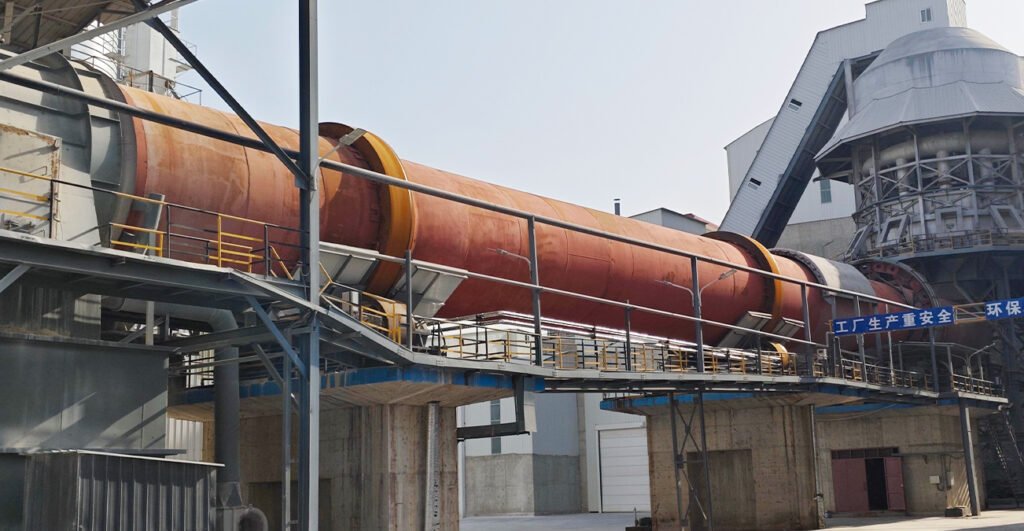
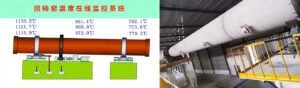
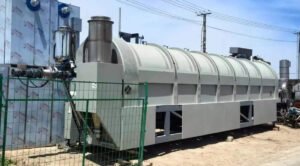
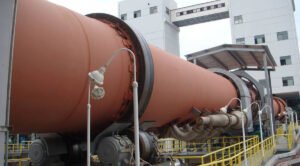
Different-types-of-Chunlei-rotary-kilns-for-ore,-cement-clinker-and-lime-calcination

Rotary kiln capacity is directly linked to your project’s annual output—choosing the wrong capacity will either limit production or waste resources. Here’s how to calculate and select:

  • Calculate your annual output demand: Determine the daily/annual calcination capacity (e.g., 100,000 tons/year of lime, 500,000 tons/year of cement clinker);
  • Matching kiln specifications: The capacity of a rotary kiln is determined by its diameter and length, and different specifications correspond to clear output ranges with detailed technical parameters for reference:
    • – Φ2.5×40m: Suitable for 50,000 tons/year calcination projects, with a rotation speed of 0.44-2.44 r/min, motor power of 55kw, and a total weight of 149.61t, ideal for small-scale mining ore calcination (such as limonite magnetization roasting);
    • – Φ3.2×50m: Suitable for 200,000 tons/year projects, with a rotation speed of 0.6-3 r/min, motor power of 125kw, and a kiln effective volume of 292m³, widely used in medium-sized cement clinker production and bauxite calcination[4];
    • – Φ4.8×72m: Suitable for 1,000,000 tons/year large-scale projects, with a design combustion temperature of 1350℃, equipped with a forced air-cooling system for the burning zone, and a long径 ratio (L/D) of 15, perfectly matching large cement plants and bulk ore calcination needs[4].
  • Reserve expansion space: If you plan to expand production in 3-5 years, choose a kiln with 10-20% excess capacity to avoid re-investment in equipment replacement.

Chunlei provides customized capacity design—our engineers will calculate the exact kiln specifications based on your actual output demand, ensuring no waste or shortage.

Fuel cost accounts for 40-60% of the total operation cost of a rotary kiln—choosing the right fuel type can significantly reduce expenses. Common fuel options and their applicable scenarios:

Suitable for areas with abundant natural gas or LPG resources. Advantages: clean combustion, low pollution, high thermal efficiency (up to 85%), low maintenance cost. Ideal for projects with strict environmental requirements (e.g., urban or near-residential areas).

Using diesel or heavy oil as fuel, suitable for areas with insufficient gas supply. Advantages: stable combustion, easy storage and transportation, adjustable heat output. Suitable for remote mining areas or temporary projects.

Pollution-free, precise temperature control, low noise. Suitable for high-purity material calcination (e.g., high-grade alumina, special ceramics) or areas with strict environmental protection policies. Although the initial investment is slightly higher, it saves long-term fuel and environmental treatment costs.

Low fuel cost, suitable for large-scale projects with abundant coal resources (e.g., large cement plants). Note: Need to match a complete flue gas treatment system to meet environmental emission standards.

Chunlei’s rotary kiln supports multi-fuel switching—we can design a dual-fuel system (e.g., gas + oil) for you, ensuring stable operation even if one fuel is in short supply.

With the increasingly strict global environmental protection policies, choosing a rotary kiln that meets emission standards is essential to avoid project shutdowns. Key environmental protection configurations to look for:

  • Pulse bag dust collector: Dust removal rate ≥99.9%, meeting international emission standards;
  • Flue gas treatment system: For NOx, SO₂ and other harmful gases, ensuring compliance with local environmental regulations;
  • Energy-saving design: Thermal insulation layer optimization, waste heat recovery system, reducing energy consumption and carbon emissions.

In addition, after-sales support is crucial for long-term stable operation. A reliable manufacturer should provide:

  • Global cases: Export to 100+ countries, with rich experience in mining, cement, lime and other calcination projects, providing reliable references.
  • On-site installation and commissioning: Professional team to ensure the kiln is installed correctly and put into operation quickly;
  • Operator training: Teach your team how to operate, maintain and troubleshoot the equipment;
  • Global after-sales service: 24-hour response, on-site maintenance support, and timely supply of spare parts.
  • Blindly pursuing low prices: Low-cost kilns often use inferior materials and simple designs, leading to short service life, high maintenance costs, and even production accidents;
  • Ignoring customization needs: Off-the-shelf rotary kilns may not match your specific material or production scale, resulting in low efficiency and energy waste;
  • Overlooking after-sales service: Poor after-sales support will cause long downtime when equipment fails, leading to huge economic losses.
  • Professional customization: Engineers conduct one-to-one communication with you, analyzing material characteristics, production scale, fuel conditions and environmental requirements to design a exclusive solution;
  • High-quality equipment: 20,000 ㎡ standard factory, strict quality inspection, core components adopt international brand, service life up to 15 years;
  • One-stop service: From selection consultation, design, manufacturing, installation, commissioning to after-sales maintenance, we provide full-process support;

Still confused about how to choose the right rotary kiln for your calcination project? Let Chunlei’s professional engineers help you—we will provide a free technical analysis and customized solution based on your project details, ensuring you choose a rotary kiln that is efficient, energy-saving and cost-effective.

Contact us for free consultation & quotation:

We will reply to your inquiry within 12 hours, and send you a detailed rotary kiln selection guide and project quotation!

RECOMMENDED PRODUCTS

loading…

已经是到最后一篇内容了!

The prev:

Related recommendations