I often tell my clients: when purchasing a rotary kiln, you shouldn’t just look at the initial price tag. Industries such as cement production, lime processing, mineral processing, and metallurgy all rely heavily on high-temperature processing equipment. However, once in operation, factors like fuel consumption, the replacement of refractory materials, routine maintenance, and losses incurred from unplanned downtime can add up to a significant expense.
Some equipment may be inexpensive to purchase, but it ends up costing much more over a few years of use. Therefore, when selecting a rotary kiln, you must look beyond the initial cost and consider the long-term operating expenses.
So, what factors actually influence the price of a rotary kiln and its return on investment? In the following sections, I will discuss the key aspects you should focus on when making a purchase—including raw materials, equipment dimensions, production capacity, operating temperatures, fuel types, material residence time, refractory materials, and automated control systems.
Factor 1: Raw Material Characteristics and Product Requirements
The characteristics of the raw materials are a significant factor influencing the price of a rotary kiln.
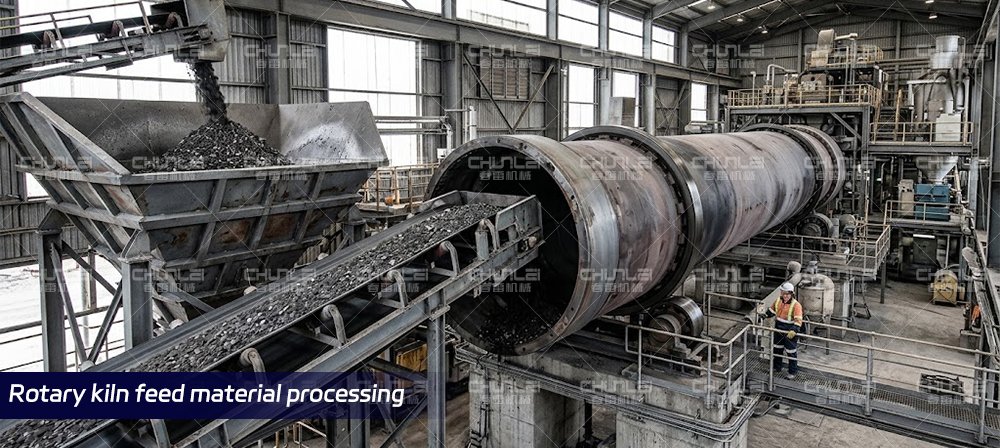
Different materials exhibit distinct behavioral responses when subjected to high-temperature environments. Factors such as the raw material’s moisture content, particle size, chemical composition, and thermal properties—along with the quality requirements for the final product—all influence the design and configuration of a rotary kiln.
For instance, a rotary kiln used for lime production may differ substantially from one used for processing mineral concentrates or industrial waste—particularly in terms of thermal operating parameters, kiln lining structure, and auxiliary equipment.
1.1 Key Raw Material Characteristics to Consider
Moisture Content
Materials with high moisture content require additional heat to evaporate the moisture before they can proceed to the primary calcination or heat-treatment stage. Depending on specific process requirements, it may be necessary to incorporate pre-drying equipment or adjust the design and thermal configuration of the rotary kiln.
Particle Size and Particle Size Distribution
Larger particles may require a longer heating duration to ensure that their interior reaches the desired degree of reaction. Conversely, excessively fine materials can complicate dust management and impose more stringent requirements on feed systems, sealing mechanisms, and exhaust gas treatment systems.
Chemical Composition
Impurities and fluctuations in the chemical composition of the raw material can affect the reaction process, product quality, and the rate of wear on refractory materials. If the material generates corrosive gases or forms an aggressive molten phase, specialized kiln lining materials and gas treatment systems may be required.
Final Product Requirements
The required degree of calcination, residual moisture content, chemical stability, and quality consistency of the final product all influence the operating temperature, material residence time, and the configuration of the control system for the rotary kiln.
1.2 Why is raw material testing important?
Before quoting, it is best to send us some representative raw material samples and then provide a reliable test report. If the material is more complex, you may have to do experiments first to see which process is more suitable.
Although the production capacity of the two projects is the same, the moisture content of the raw materials, particle size and product requirements are different, and the configuration of the rotary kiln may also be completely different. Therefore, when selecting equipment, you should not just look at the production capacity, but also the actual material situation.
Factor 2: Rotary Kiln Dimensions and Production Capacity
The size of a rotary kiln directly influences its price. Larger kilns require more steel, as well as more robust support and drive systems, along with more sophisticated feeding and discharge equipment—all of which drive up the overall cost. Bigger is not necessarily better; the key is to make the right choice. You need to ensure sufficient production capacity, compatibility with your raw materials, and consider factors such as daily operating hours and any potential future plans for capacity expansion. This approach ensures that your investment delivers real value.
2.1 Rotary Kiln Diameter and Length
The diameter of a rotary kiln affects the internal processing space and the volume of material that can be accommodated and handled, while the length determines the duration of heating and reaction time available to the material.
The specific combination of dimensions depends on factors such as material movement characteristics, heat transfer efficiency, gas flow dynamics, and target production capacity.
A larger diameter may support a higher throughput, but it also tends to increase both the capital cost of the equipment and the structural requirements. A longer kiln provides more processing time, though it also necessitates a greater quantity of refractory materials, more installation space, and additional auxiliary equipment.
2.2 Design Capacity vs. Actual Output
When procuring a rotary kiln, one should not rely solely on the capacity figures provided in a manufacturer’s quote; it is essential to verify whether the equipment can consistently achieve that output under actual operating conditions.
Factors such as raw material moisture content, calcination requirements, heating and cooling conditions, equipment maintenance, material feed and discharge processes, and even the availability of fuel and labor can all impact actual production output.
For instance, if a project targets an annual production of 120,000 tons, with a planned operating time of 8,000 hours per year and an equipment availability rate of 90%, the rotary kiln would need to process approximately 16.7 tons of material per hour.
Therefore, when selecting a model, do not focus exclusively on the equipment’s nominal capacity. You must account for the target annual output, planned operating hours, and expected equipment downtime to ensure you choose the model that is truly appropriate for your needs.
2.3 Avoid Oversizing or Undersizing Equipment
Bigger is not necessarily better, and the cheapest option is rarely the best. Choosing equipment that is too large leads to unnecessary expenses—not only in the initial purchase price but also in installation and long-term maintenance. Conversely, choosing equipment that is too small can easily result in an inability to meet production targets, creating a bottleneck for the entire production line.
With our extensive experience in the equipment industry, we know that the key to selection is finding the right fit. You must ensure the equipment meets your current production requirements while also accounting for potential future changes, such as shifts in raw materials or increases in output. Before finalizing your choice, be sure to ask the supplier: “How exactly was this production capacity calculated? What specific raw materials and operating conditions are required to actually achieve this level of output?”
Factor 3: Operating Temperature and Thermal Regime
The operating temperature directly influences the calcination performance of a rotary kiln, as well as product quality, fuel consumption, and the service life of the refractory materials.
Different materials require distinct heat treatment conditions. Some processes necessitate only moderate temperatures, while others demand sustained high temperatures, along with precise control over the heating and cooling phases.
Consequently, selecting a rotary kiln based solely on its maximum design temperature is often insufficient. It is far more critical to ensure that the equipment can maintain the required temperature distribution and thermal regime under actual production conditions.
3.1 Maximum Design Temperature vs. Actual Operating Temperature
The maximum design temperature represents the upper limit that a piece of equipment can withstand, whereas the actual operating temperature is the temperature truly required for the production process.
In my many years of working with such equipment, I have encountered many clients who insist on high temperature specifications from the outset—often unnecessarily. A higher design temperature typically entails greater costs for refractory materials, thermal insulation structures, and instrumentation. If the production process doesn’t actually require such high temperatures, the additional expenditure may not be justified.
Conversely, one should not simply opt for the lowest possible specifications. If the temperature capacity is insufficient, the product quality may fail to meet requirements, and the production process itself may become unstable. Therefore, when selecting a rotary kiln, the goal is not to aim for the highest possible temperature, but rather to ensure the equipment aligns with the specific needs of your production process.
3.2 Temperature Uniformity
Temperature uniformity is just as important as the maximum temperature.
Uneven temperature distribution can lead to:
Incomplete calcination
Overfiring of products or degradation in their performance
Inconsistent product quality
Increased fuel consumption
Greater thermal stress on refractory materials
Instability in the production process
Proper burner arrangement, airflow management, kiln structure, and temperature monitoring systems all contribute to improving thermal performance.
3.3 Temperature Control and Product Quality
The temperature in a rotary kiln must be well-controlled; this ensures production remains as stable as possible, even when raw materials vary or production output is adjusted.
For instance, in the production of lime, if the temperature is too low, the limestone will not be calcined thoroughly; conversely, if the temperature is too high, it may become over-burnt, which negatively affects the lime’s reactivity.
Therefore, a higher kiln temperature is not necessarily better. The key is to maintain the temperature within an appropriate range, based on the specific raw materials used and the required product quality. Before designing a rotary kiln, it is essential to clearly define the required operating temperatures, target product quality, and potential variations in raw materials—this provides a more reliable foundation for equipment selection and subsequent production.
Factor 4: Fuel Type and Energy Efficiency
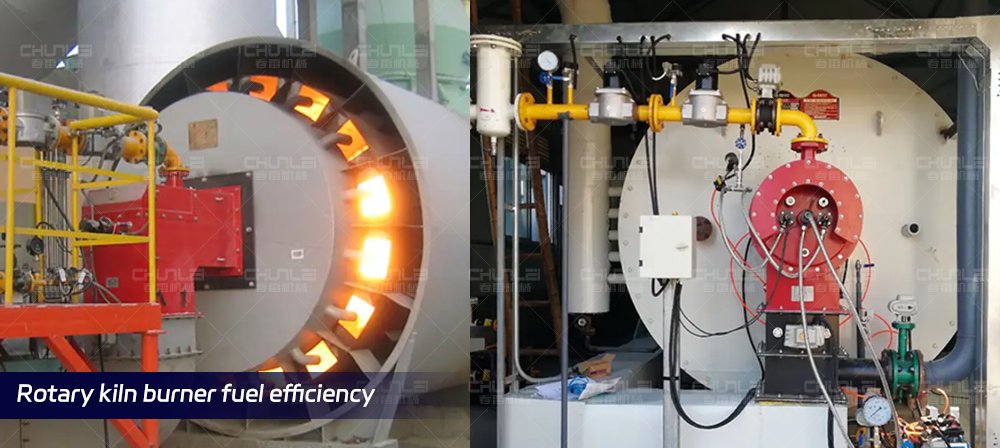
Fuel consumption represents a significant portion of the operating costs for a rotary kiln. For equipment that requires long-term, continuous operation, even a marginal improvement in energy efficiency can lead to substantial cost savings.
The most suitable fuel system depends on factors such as local fuel availability, pricing, combustion characteristics, environmental regulations, and the temperatures required by the process.
4.1 Common Fuel Types
Depending on the specific application and local regulations, rotary kilns can utilize natural gas, coal, fuel oil, or suitable alternative fuels. Some systems may also employ electric heating or hybrid energy solutions.
Fuel or Energy Type
Potential Advantages
Factors to Consider
Natural Gas
Burns relatively cleanly; easy to control
Supply stability, price volatility, gas supply infrastructure
Coal
May offer cost advantages in regions with stable supply
Emission controls, fuel preparation, ash management, and handling requirements
Fuel Oil
High energy density; well-established in industrial applications
Storage and transport, combustion emissions, price
Alternative Fuels
Potential for lower fuel costs and resource recovery/utilization
Fuel consistency, environmental permits, emissions, and complexity of feed systems
Electric Heating
High precision in temperature control; no direct combustion process at the heating site
Electricity costs, power supply capacity, heating requirements, and overall system economics
There is no single “best” fuel solution that applies to all projects. Even if a particular fuel is technically feasible, its overall economic viability may be poor if the supply is unstable or the price is too high.
4.2 Thermal Efficiency and Heat Loss
The following factors influence the energy consumption of a rotary kiln:
Properties of refractory materials and thermal insulation structures
Flue gas temperature
Combustion air control
Burner efficiency
Moisture content of raw materials
Kiln shell sealing and air leakage
Material throughput and process stability
Waste heat recovery conditions
If a rotary kiln has low thermal efficiency, a significant amount of usable heat may be lost through high-temperature flue gas, heat radiation from the kiln shell, air infiltration, or incomplete combustion.
4.3 Case: Impact of Annual Fuel Costs
When I talk to customers about rotary kilns, I often remind them: Don’t just look at whether the equipment is expensive to buy, but also whether it will cost money later.
For example, a rotary kiln consumes 1.8 gigajoules of energy per ton of product processed and produces 100,000 tons per year. Calculated at US$8 per gigajoule, the fuel cost alone will cost US$1.44 million per year.
Therefore, when selecting equipment, you should not just focus on the purchase price, but the energy costs of long-term operation must also be clearly calculated. Of course, the actual cost depends on the raw materials, equipment structure, fuel and operation conditions.
4.4 Evaluating the Total Cost of the Energy System
Burners or fuel systems with a lower purchase price may require additional equipment, such as fuel preparation systems, storage facilities, dust collection systems, or exhaust gas treatment units.
Therefore, when making a procurement decision, one should compare the installation costs of the entire energy system rather than focusing solely on the price of the burner itself.
During the procurement process, it is essential to clarify the energy consumption required to produce one ton of product—and to understand the specific raw materials and operating conditions under which this figure was calculated. Furthermore, be sure to account for the energy consumption of all auxiliary equipment; only by doing so can you accurately determine which solution is the most cost-effective.
Factor 5: Material Residence Time and Rotational Speed
Material residence time refers to the duration a material spends inside a rotary kiln, from the point of entry to the point of discharge. It influences the extent to which the material is heated, the degree to which reactions are completed, product uniformity, and production capacity.
The rotational speed of a rotary kiln is a key operational parameter affecting the movement of the material; however, it is not the sole factor that determines residence time.
5.1 Why is material residence time important?
If material moves through the kiln too quickly, it may not receive sufficient heat treatment, leading to incomplete reactions or inconsistent product quality.
Conversely, if the material remains in the kiln for too long, it can reduce production efficiency and increase energy consumption. For certain materials, prolonged exposure to high temperatures may also impair product performance.
The appropriate material residence time depends on:
Particle size and shape
Raw material composition and moisture content
Required degree of reaction or calcination
Diameter and length of the rotary kiln
Inclination angle of the kiln
Rotational speed of the kiln
Internal structures such as lifters (flights) and retaining rings
Gas flow direction and temperature distribution
5.2 Rotational Speed and Material Movement
The rotational speed of a rotary kiln influences the movement of the material inside; however, a higher speed is not necessarily better. Factors such as the kiln’s inclination angle, the volume of material loaded, the characteristics of the material itself, and the internal configuration all affect the rate at which the material travels through the kiln. Ultimately, the rotational speed must be adjusted according to specific operating conditions to achieve the desired processing results.
5.3 Balancing Throughput and Product Quality
How should a rotary kiln be adjusted for optimal performance? In essence, the goal is to maintain the required production output while ensuring the material is properly processed to meet quality standards. If the rotation speed is too high, the material may exit the kiln before it is thoroughly processed; conversely, if the operating parameters are too conservative, fuel is wasted, leading to unnecessary increases in costs.
For instance, in certain mineral processing applications, heat treatment is required to achieve specific chemical or physical properties. If the residence time is too short, the final product may fail to meet quality specifications; if the process parameters are overly conservative, it can result in excessive energy consumption and higher processing costs.
When selecting equipment, it is advisable to ask the supplier for clear guidance on how to adjust parameters—such as kiln rotation speed, inclination angle, material residence time, and load volume—and to explain how these adjustments affect both production output and product quality.
Factor 6: Refractory Materials and Kiln Lining Design
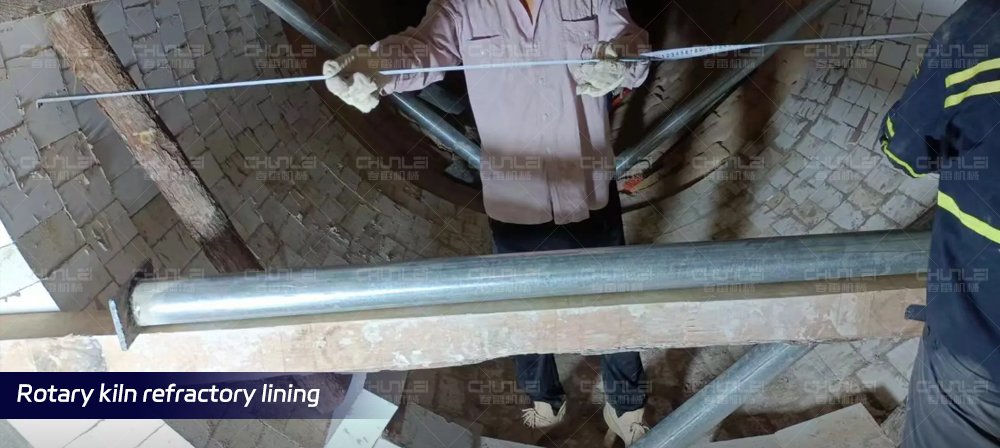
Refractory materials are used to protect the steel shell of a rotary kiln from high temperatures and chemical erosion, while also helping to reduce heat loss and maintain stable operating conditions.
The choice of refractory materials affects both the initial cost of the equipment and its long-term maintenance costs.
6.1 Key Considerations for Refractory Materials
The choice of kiln lining material depends on operating temperatures, the chemical environment, mechanical wear, thermal cycling, and the characteristics of the materials being processed.
Key factors to consider include:
Maximum design temperature and normal operating temperature
Resistance to chemical erosion
Wear and impact resistance
Thermal shock resistance
Thermal insulation properties
Compatibility with raw materials and process atmospheres
Expected service life
Availability of replacement materials
Investing in higher-priced refractory materials may be worthwhile if they offer a longer service life, superior thermal insulation, or a reduction in unplanned downtime.
However, the most expensive material is not necessarily the best choice for a given process.
6.2 Initial Cost vs. Total Life-Cycle Cost
When evaluating refractory materials, it is essential to consider the costs incurred over their entire expected service life.
For example, one type of kiln lining material may have a purchase cost of $80,000 and an expected service life of two years, while another material may cost $120,000 with an expected service life of four years.
Although the second material has a higher initial price, its average annual material cost may be lower.
The final decision should also take into account factors such as installation labor, kiln downtime, maintenance requirements, and production losses.
6.3 Maintenance and Inspection of Refractory Materials
Regular inspections help to identify cracks, localized wear, abnormal hot spots, and other signs of damage to the kiln lining at an early stage, preventing issues from escalating and causing serious equipment damage.
Inspection schedules should be developed based on the equipment manufacturer’s recommendations, while also taking into account the specific operating environment. Monitoring the temperature of the kiln shell and conducting thorough inspections during scheduled shutdowns also facilitate the creation of more effective maintenance plans.
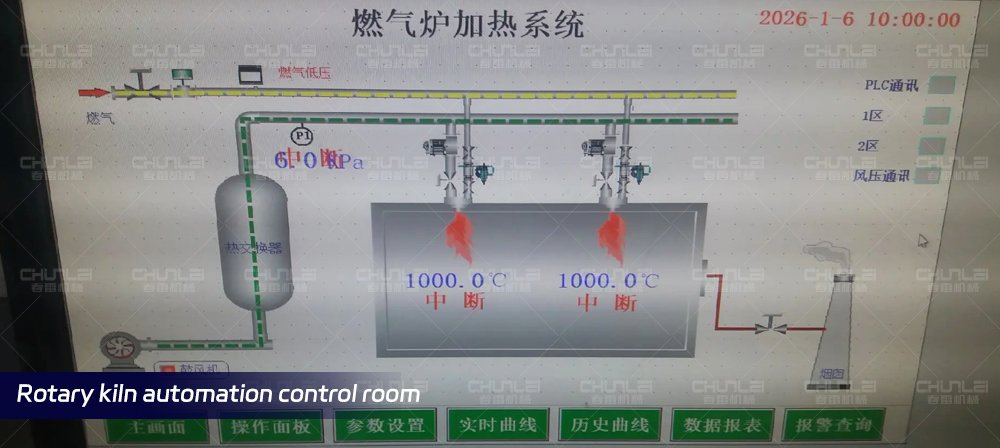
While automation and process control systems may increase the initial investment for a rotary kiln, they also help enhance operational stability, reduce unnecessary fuel consumption, and lower the risk of production interruptions.
The appropriate level of automation depends on process complexity, production scale, staffing, and the plant’s maintenance capabilities.
7.1 Key Control Functions
A rotary kiln control system may need to monitor and manage the following parameters:
Kiln internal temperature
Burner operating status and fuel supply
Rotary kiln rotational speed
Feed rate
Kiln internal pressure and draft
Oxygen content and combustion status
Motor load and drive system status
Equipment alarms and interlock conditions
Operating status of exhaust gas treatment equipment
Specific instrumentation and control configurations should be determined based on process requirements and applicable safety standards.
7.2 What are the advantages of a well-developed control system?
Improved product quality consistency
Monitoring key process parameters helps operators maintain stable operating conditions and respond promptly to variations in raw materials.
Enhanced energy management
Accurate measurement and control help reduce unnecessary energy consumption caused by issues such as incomplete combustion, excess air, and air leakage.
Reduced unplanned downtime
Equipment alarms, condition monitoring, and standardized operating procedures enable maintenance teams to detect potential failures at an earlier stage.
Better production record-keeping
Historical operational data facilitates the comparison of equipment performance, the analysis of quality issues, and the identification of opportunities for further optimization.
7.3 Avoid Unnecessary System Complexity
A higher degree of automation does not necessarily equate to better operational performance.
Complex control systems can lead to higher capital investment and place greater demands on specialized training, the availability of spare parts, and technical support.
The objective should be to select a system that provides the necessary control and monitoring functions while avoiding unnecessary complexity.
Clearly define which process parameters require continuous monitoring, which operating conditions need automatic control, what safety interlocks must be implemented, and what level of technical support the supplier can provide.
Rotary Kiln Price Comparison: What Should You Evaluate When Purchasing?
When making a purchase, one should not focus solely on the quoted price; instead, it is essential to comprehensively evaluate equipment configurations and after-sales service. Price ranges can vary significantly between suppliers, often due to differences in equipment specifications and configuration standards. To avoid the additional costs—such as those for future retrofitting, maintenance, and ongoing operation—that can arise from choosing a lower-priced option, the focus should be on the total life-cycle cost of the equipment, rather than just the initial purchase price.
Comparison Table of Rotary Kiln Purchase Prices
Procurement Advice: When requesting quotes from different suppliers, ensure that specifications—such as materials, target production capacity, operating temperature, heat source, automation requirements, and the scope of supply—are consistent across all inquiries. Furthermore, require each supplier to itemize the costs for the equipment itself, auxiliary systems, installation and commissioning, and estimated operating expenses. Only by comparing bids under identical technical conditions can you accurately determine which rotary kiln offers the best value for money.
Comparison Criteria
Key Aspects to Compare
Impact on Price
Equipment Specifications
Shell diameter, length, effective volume, and design capacity
Larger specifications generally lead to higher capital investment
Processing Capacity
Throughput (per hour or per day) and material residence time
Higher capacity requirements typically necessitate larger equipment or more advanced configurations
Materials and Construction
Shell steel grade, plate thickness, support rollers, trunnion rollers, and drive mechanism
Higher material standards and greater structural strength may increase the quoted price
Refractory Materials
Type, thickness, and service life of refractory bricks or castables
Configurations designed for high-temperature or corrosive environments may raise initial costs
Heating System
Fuel source (gas, oil, pulverized coal, etc.)
Different heat sources require specific combustion systems and associated auxiliary equipment
Energy Consumption and Thermal Efficiency
Fuel consumption per unit of output, heat loss, and waste heat recovery solutions
Affects long-term fuel expenditure and operating costs
Automation Configuration
Temperature monitoring, variable-frequency drives (VFD), PLC control, and interlocking safety systems
Higher levels of automation generally result in greater investment in control systems
Scope of Supply
Main unit, burner, preheater, cooler, dust collection system, and installation services
The range of auxiliary equipment and services significantly influences the total quoted price
Installation and Transportation
Packaging, logistics, foundation construction, on-site installation, and commissioning
Project location and site conditions impact the total landed cost
After-Sales and Spare Parts
Warranty period, supply of wear parts, technical support, and maintenance services
Affects the risk of downtime and long-term maintenance expenses
Total Cost
Costs related to procurement, installation, energy consumption, repairs, and refractory material replacement
Value for money should be evaluated based on the total life-cycle cost
How to Evaluate the Return on Investment (ROI) for a Rotary Kiln?
Evaluating the return on investment for a rotary kiln requires more than just looking at the equipment purchase price; it necessitates a comprehensive analysis of production capacity, energy consumption, raw material costs, product selling prices, and operational efficiency. Through rigorous investment analysis, enterprises can assess a project’s profitability, the speed of capital recovery, and its long-term investment value—providing a reliable basis for equipment selection and project decision-making.
The evaluation of a rotary kiln’s ROI primarily focuses on the following aspects:
Initial Investment Cost: Includes the cost of the rotary kiln unit itself, auxiliary equipment, transportation, installation, commissioning, infrastructure construction, and working capital.
Production Capacity and Output: Estimates the effective annual output based on the equipment’s actual processing capacity, annual operating hours, utilization rate, and the yield of qualified products.
Energy Consumption Costs: Accounts for fuel and electricity usage, as well as waste heat recovery, with a focus on how energy consumption per unit of product affects overall production costs.
Annual Operating Costs: Encompasses expenses for raw materials, labor, maintenance, replacement of refractory materials, environmental compliance, and other routine operational outlays.
Product Sales Revenue: Forecasts annual sales revenue based on the volume of qualified products, market selling prices, product quality, and market demand.
Return on Investment (ROI): Assesses the project’s annual investment return by calculating the ratio of net annual earnings to the total investment.
Payback Period: Estimates the time required to recover the initial investment based on the total investment amount and annual net cash flow.
Risk and Sensitivity Analysis: Evaluates how factors such as rising fuel prices, declining product selling prices, lower capacity utilization, or equipment downtime might impact profitability.
By comprehensively analyzing these indicators, enterprises can more accurately determine the economic feasibility of a rotary kiln project and select an equipment solution that balances processing efficiency, energy utilization, operational stability, and long-term returns.
FAQ
Q: What is the typical price range for a rotary kiln? A: The price of a rotary kiln varies based on equipment specifications, processing capacity, material composition, and production process. There is a significant price difference between small-scale rotary kilns and large industrial units; specific quotes are determined by factors such as material characteristics, production requirements, and equipment configuration.
Q: What factors influence the price of a rotary kiln? A: Key factors affecting the price include the diameter and length of the kiln shell, processing capacity, refractory materials, drive systems, combustion systems, the level of automation, and auxiliary equipment. Generally, a higher degree of customization leads to a higher total investment cost.
Q: How do prices differ for rotary kilns of various specifications? A: In general, larger shell dimensions and higher processing capacities result in higher manufacturing costs. However, the actual price also depends on design pressure, operating temperature, material properties, material specifications, and the chosen configuration; therefore, price cannot be determined solely by the size of the equipment.
Q: Which is more expensive: a gas-fired rotary kiln or a coal-fired rotary kiln? A: The cost for either type depends on the combustion system, environmental compliance requirements, and auxiliary equipment. Gas-fired kilns typically require gas supply and control systems, while coal-fired kilns may require equipment for pulverized coal preparation, transport, and dust collection. A comprehensive comparison should be made based on local fuel prices and operational costs.
Q: How much cheaper is a used rotary kiln compared to a new one? A: While used rotary kilns generally have a lower initial purchase cost, the actual price difference depends on the equipment’s age, wear and tear, maintenance history, and remaining service life. Before purchasing, it is essential to inspect the condition of the kiln shell (checking for deformation), support rollers, riding rings, gear drives, and refractory linings, and to evaluate the costs associated with refurbishment.
Q: Does a rotary kiln quote include installation costs? A: Not necessarily. Some suppliers provide quotes only for the equipment itself, while others offer a comprehensive package that includes installation guidance, commissioning, and technical services. When requesting a quote, you should clarify whether it covers transportation, foundation construction, electrical systems, auxiliary equipment, installation, and commissioning.
Q: Why are customized rotary kilns more expensive?
A: A custom-designed rotary kiln must be engineered based on specific parameters—such as material composition, moisture content, target temperature, residence time, and production capacity requirements. This may necessitate the use of specialized materials, non-standard dimensions, custom combustion systems, and bespoke automated control solutions, all of which can lead to higher design and manufacturing costs.
Q: How can the procurement cost of a rotary kiln be reduced? A: Costs can be managed by carefully selecting appropriate equipment specifications, optimizing process workflows, comparing technical proposals from different suppliers, and eliminating unnecessary features. However, one should not focus solely on the lowest purchase price; factors such as thermal efficiency, equipment lifespan, maintenance costs, and production stability must also be considered to minimize long-term operational expenses.
Q: What costs should be considered—beyond the equipment price—when purchasing a rotary kiln? A: In addition to the purchase price, one must account for expenses related to transportation, installation, infrastructure/foundation work, fuel and electricity consumption, replacement of refractory materials, spare parts, labor, and environmental protection facilities. A comprehensive assessment of both the initial investment and long-term operational costs is essential for an accurate evaluation of a project’s economic viability.
Q: How can one obtain an accurate price quote for a rotary kiln? A: It is recommended to provide suppliers with detailed information, including the material to be processed, its moisture content upon entry, target production capacity, operating temperature, type of heat source, product specifications, and the project location. If you have specific requirements regarding the process flow or equipment configuration, these should also be provided so that the supplier can develop a more precise technical proposal and an accurate price quote.
Summary
Having been in equipment sales for so many years, I have always felt that when buying a rotary kiln, you should not just look at the price and production capacity. It is really cost-effective if it is suitable for your own process, has stable operation and saves money in the future.
Before selecting equipment, first confirm the raw materials, target output, operating temperature and fuel conditions, and then compare the equipment configuration and quotation to avoid wasting money.
Not sure which rotary kiln is right for your project?
Tell us your raw material and production capacity needs, and we will help you recommend suitable equipment solutions! Contact us now for a free plan!
Adjusting the flue gas control ratio of lime kiln rotary kiln (usually refers to the ratio of key components in the flue gas, such as O₂, CO, NOx, SO₂, etc.) needs to take into account the combustion efficiency, environmental protection requireme...
The choice between a direct-heated rotary kiln and an indirect-heated rotary kiln directly impacts product quality, fuel consumption, process control, and equipment service life. Making the right selection requires more than just considering the ...
At present, the contradiction between industrial production and environmental pollution is becoming more and more prominent, and smelting industry has become one of the main sources of pollution. In order to improve people's living environment, t...
If you inquire about the price of a rotary kiln, you may receive varying quotes—sometimes with significant differences. It is crucial to understand exactly what is included in these quotes; equipment that appears similar in size can ultimately di...
 Chunlei Rotary kiln