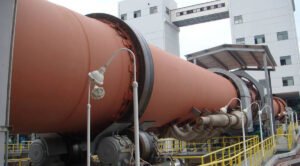
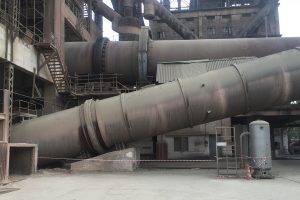
Purchasing a rotary kiln involves much more than just looking at its diameter, length, and nominal capacity. We have encountered many clients who selected equipment based on seemingly appropriate specifications, only to find—once operations began—that the actual output fell short, while fuel consumption and overall operating costs soared.
Therefore, the key to selecting a rotary kiln lies in carefully evaluating your specific material characteristics, feed moisture content, required calcination temperature, and production targets. Factors such as the appropriate kiln size, the necessary heat input, and the required material retention time within the kiln must all be calculated precisely in advance.
Before procuring a rotary kiln, engineers should employ a systematic calculation methodology to align actual process requirements with equipment dimensions, thermal performance, and operational conditions.
What factors determine the dimensions and capacity of a rotary kiln?
The dimensions and capacity of a rotary kiln are not determined solely by the target production output; rather, they are dictated by a combination of material properties, process requirements, thermal conditions, kiln structure, and operational parameters. In applications such as cement calcination, lime roasting, pellet oxidation, ore reduction, and the roasting of lithium-bearing minerals, the required kiln diameter, length, rotational speed, and heat source configuration can vary significantly—even when the target production capacity is the same.
From the perspective of mineral processing and industrial kiln design, the core challenge lies in ensuring that the material—within the constraints of the kiln’s internal volume and residence time—undergoes the necessary heat transfer, mass transfer, and chemical reactions, while simultaneously meeting requirements for production output, product quality, and energy consumption.
8 Key Factors Determining Rotary Kiln Dimensions and Capacity
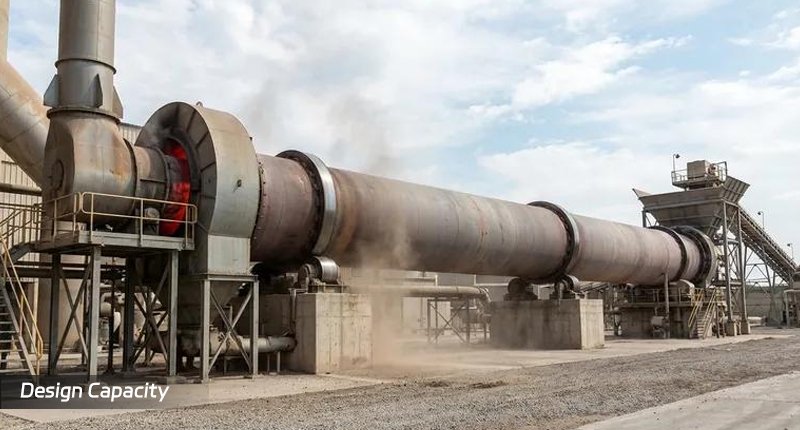
1. Design Capacity
This serves as the starting point for initial equipment selection. During the design phase, it is essential to define the required throughput (per hour or per day), as well as the duration of continuous operation, the number of operating days per year, and the equipment utilization rate.
A higher target output generally necessitates a greater effective processing capacity.
A distinction should be made between the volume of raw materials processed and the final product yield.
Equipment selection should not be based solely on nominal tonnage; peak loads and operational margins must also be taken into account.
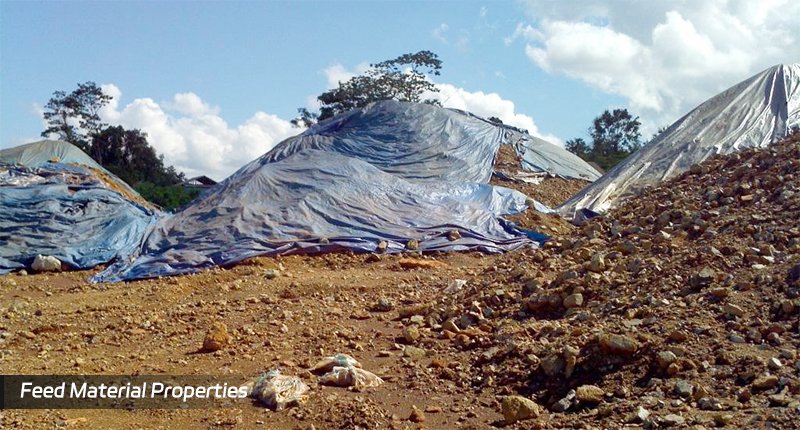
2. Feed Material Properties
The characteristics of the feed material directly influence material transport, heat exchange, and reaction rates.
Particle size and particle size distribution: Affect gas-solid contact and heat transfer efficiency.
Moisture content: Determines the drying load and the heat required for evaporation.
Chemical composition and mineralogical makeup: Influence reaction temperatures and product quality.
Bulk density, viscosity, and tendency to agglomerate: Affect the degree of filling within the kiln, material flow, and the risk of ring formation.
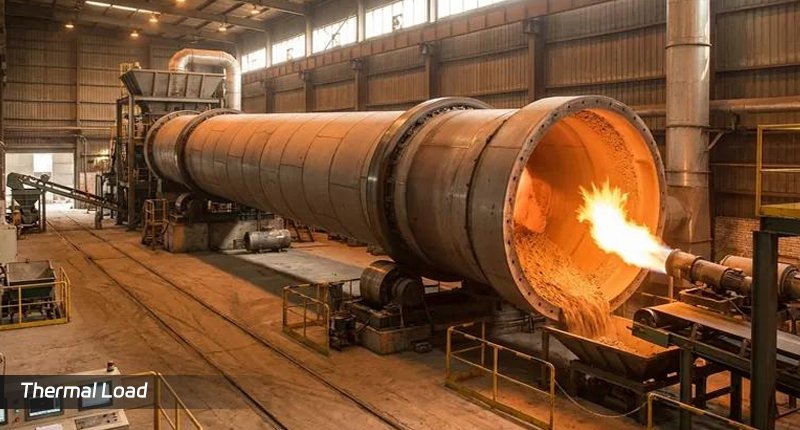
3. Process Temperature and Thermal Load
Heat requirements vary significantly across different processes. It is necessary to determine the feed temperature, target reaction temperature, outlet temperature, heat losses, and whether the reaction is endothermic or exothermic.
A higher thermal load generally requires a greater heating capacity.
Production capacity is constrained by factors such as fuel combustion, flue gas flow, and heat transfer efficiency.
The kiln diameter, effective heating length, and combustion system must be properly matched.
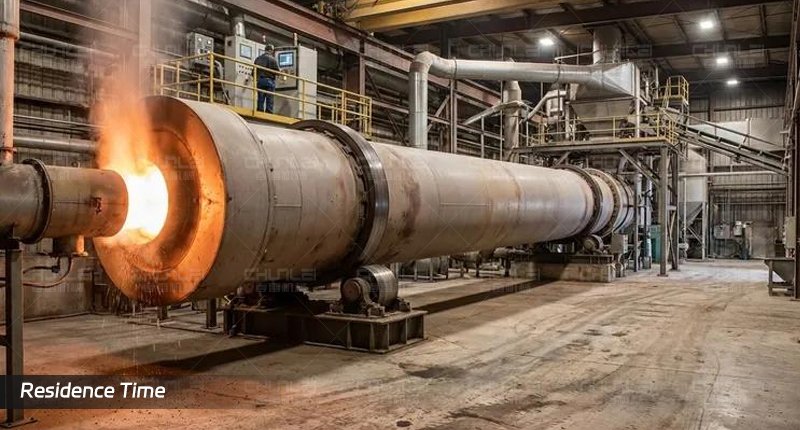
4. Residence Time
Material must remain in the kiln for a sufficient duration to achieve the required degree of dehydration, decomposition, oxidation, reduction, or calcination.
Generally, slower reactions necessitate a longer effective residence time.
Insufficient residence time can lead to incomplete reactions or inconsistent product quality.
Conversely, an excessively long residence time may reduce throughput and increase the risk of over-firing.
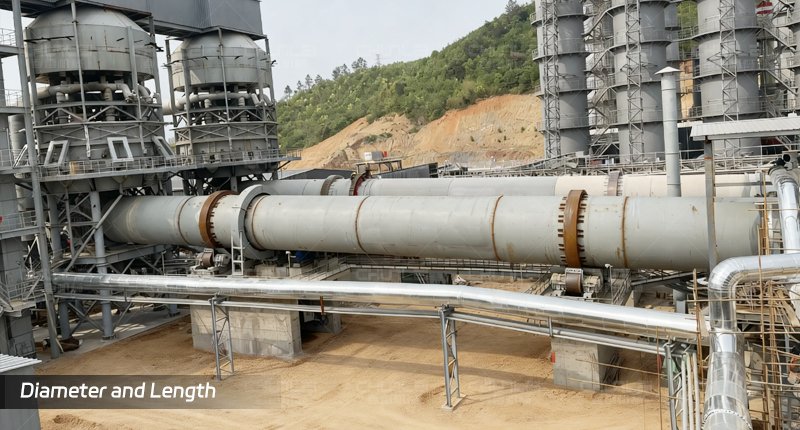
5. Kiln Diameter and Length
The diameter influences the effective volume, processing capacity per unit length, and gas-solid heat exchange conditions; the length affects the material residence time and the space available for various process zones.
Increasing the diameter generally expands the effective volume within the kiln.
Increasing the length extends the residence time, though it also leads to higher equipment investment costs and greater heat loss.
The length-to-diameter ratio (L/D) must be determined based on the specific characteristics of the material and the requirements of the process flow.
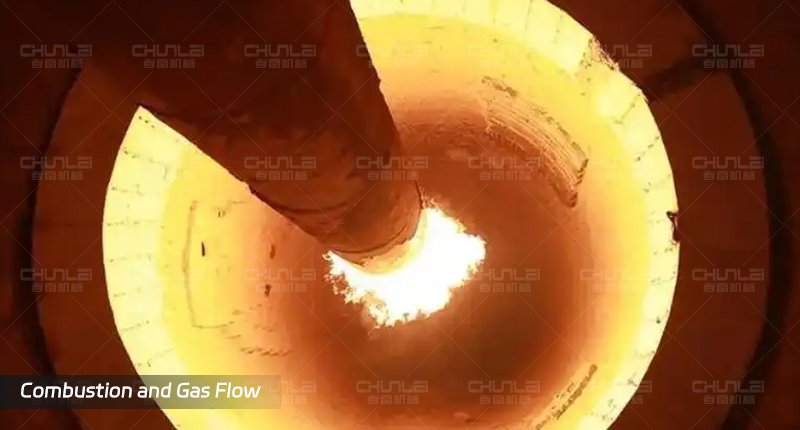
6. Combustion and Gas Flow Conditions
Burner capacity, fuel type, excess air ratio, flue gas velocity, and the relative flow directions of gas and solids all influence kiln performance.
Insufficient heat supply can make thermal conditions a bottleneck for production capacity.
Excessive gas flow may lead to dust entrainment or a reduction in effective contact time.
A balance must be struck between heat transfer efficiency, flue gas exhaust conditions, and environmental requirements.
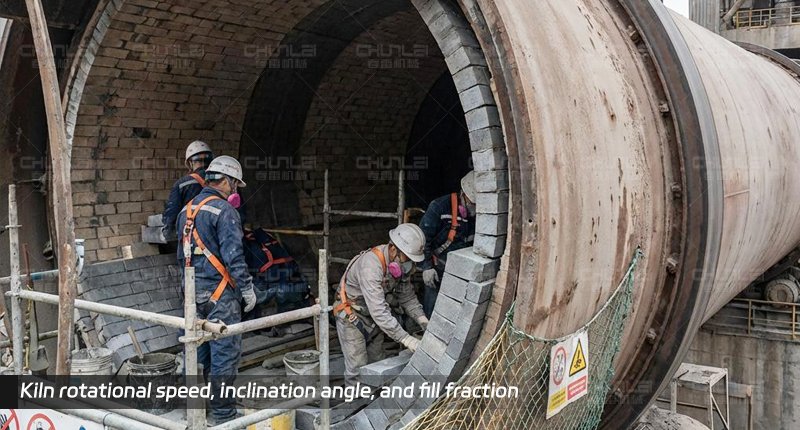
7. Kiln Rotation Speed, Inclination Angle, and Fill Degree
These operational parameters collectively influence the axial movement, tumbling, mixing, and residence time of the material.
Increasing the rotation speed does not necessarily lead to higher effective capacity.
The inclination angle and the flowability of the material affect the residence time.
An excessively high fill degree may impair heat transfer and hinder material transport.
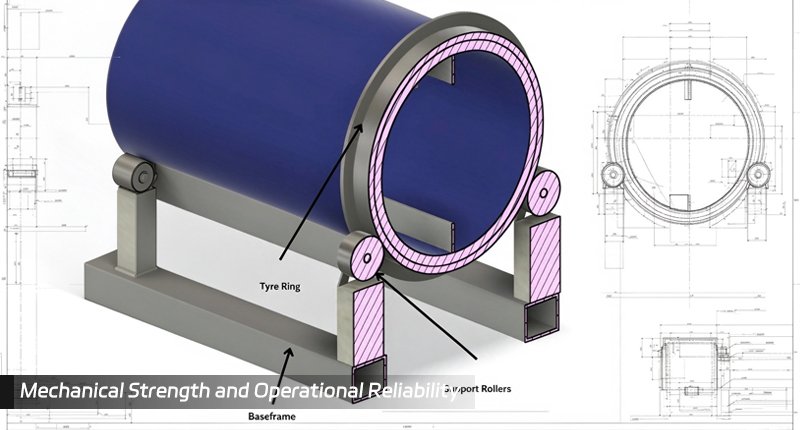
8. Mechanical Strength and Operational Reliability
Factors such as the dead weight of the kiln shell, material load, weight of the refractory lining, support span, thermal expansion, and the drive system all influence the dimensions that can be adopted.
Scaling up to larger sizes also necessitates the verification of shell strength, loads on the riding rings and support rollers, drive torque, foundation load-bearing capacity, and sealing configurations.
How do kiln diameter and kiln length affect production capacity?
Kiln Diameter (D)
This primarily influences the effective volume, material load capacity, gas flow velocity, and heat transfer conditions. Under ideal geometric conditions—assuming constant length—the volume is directly proportional to the square of the diameter.
Kiln Length (L)
This primarily affects the residence time, the length of the preheating and reaction zones, and the space available for heat transfer. Increasing the kiln length does not necessarily result in a proportional increase in production capacity; factors such as pressure drop, heat loss, and equipment costs must also be considered.
For example, under ideal conditions—where the internal kiln diameter, material fill ratio, and material properties remain constant—a 10% increase in diameter results in an approximately 21% increase in geometric volume. However, this does not mean that the actual production capacity will also increase by 21%, as thermal conditions, reaction rates, and mechanical loads may emerge as new limiting factors.
Key Considerations for Selecting Rotary Kilns for Different Materials
Application Scenarios
Key Design & Control Factors
Common Capacity Constraints
Limestone Calcination
Decomposition temperature, particle size, heat supply, and CO₂ removal
Heat supply, degree of decomposition
Oxidized Pellet Roasting
Pellet size, strength, and temperature regime
Roasting duration, product quality
Laterite Nickel Ore Processing
Moisture content, mineral composition, drying and reduction requirements
Completeness of phase transition, temperature uniformity
Roasting of Lead, Zinc, and Other Ores
Mineral composition, reaction atmosphere, flue gas treatment
Reaction rate, gas flow, and environmental compliance requirements
The above points represent typical design considerations for various processes; specific limiting factors must be determined based on raw material testing and the chosen process scheme.
How are rotary kiln dimensions determined for an actual project?
It is recommended to follow this design sequence:
Step 1: Raw Material Analysis and Testing
Determine particle size, moisture content, bulk density, and chemical composition, and conduct necessary thermal analysis and reaction characteristic testing.
Step 2: Define Design Capacity and Process Parameters
Specify raw material throughput, product output, target conversion rates, product quality requirements, and continuous operation criteria.
Step 3: Perform Material and Heat Balances
Calculate water evaporation, reaction heat, fuel consumption, flue gas volume, and heat losses.
Step 4: Preliminary Selection of Kiln Dimensions and Operating Parameters
Determine kiln diameter, length, and operating parameters—including effective volume, residence time, fill ratio, rotational speed, inclination, and temperature zoning.
Step 5: Verification and Optimization
Verify the degree of reaction completion, product quality, thermal efficiency, mechanical strength, environmental compliance, and operational stability.
Common Pitfalls in Rotary Kiln Selection
The core of selecting a rotary kiln lies not merely in purchasing a piece of equipment with the appropriate dimensions, but in choosing a thermal processing system capable of consistently meeting specific process requirements. From the perspectives of mineral processing and industrial equipment engineering, this text analyzes the most frequent errors and potential risks encountered during the selection of rotary kilns, while outlining the correct approach to the selection process.
The 8 Most Common Mistakes in Rotary Kiln Selection
Error 1: Focusing solely on rotary kiln dimensions without analyzing material properties
This is the most fundamental error in rotary kiln selection—and the one most likely to cause subsequent operational issues.
Different materials undergo vastly different physical and chemical changes when heated. Even if two materials have the same throughput requirements, it does not mean they can be processed using the same rotary kiln specifications.
Before selecting a kiln, it is essential to analyze the following:
Chemical composition: Major components, impurities, volatile content, and potential side reactions.
Moisture content: The moisture level of the raw material affects drying loads and fuel consumption.
Particle size distribution: Particle size and the proportion of fine particles influence heat transfer, dust generation, and material transport.
Bulk density: This affects the kiln’s material load, drive requirements, and effective processing capacity.
Thermal properties: Specific heat capacity, decomposition temperature, heat of reaction, and the tendency for the material to stick or sinter at high temperatures.
Abrasiveness and corrosivity: These factors influence the selection of the kiln shell lining, refractory materials, and other related components.
Collectively, these parameters dictate the rotary kiln’s diameter, length, rotational speed, thermal load, and lining design.
The correct approach: Conduct a thorough material analysis—including necessary thermal analysis or testing—before finalizing the equipment configuration. Do not select a model first and then attempt to adjust the process to fit it.
Error 2: Mistaking nominal equipment capacity for actual capacity
Some procurement personnel focus solely on the “tons per hour” or “tons per day” figures listed in equipment specification sheets, failing to verify the specific material conditions, feed moisture content, and product quality requirements upon which these capacity figures are based.
The actual capacity of a rotary kiln is constrained by a combination of factors, including:
The nature of the raw materials and the stability of the feed;
The target degree of reaction and product quality standards;
Heat supply and heat transfer efficiency;
The residence time of the material within the kiln;
The capacity of the burner, induced-draft fan, and downstream cooling equipment.
For instance, while a rotary kiln might achieve its target output when processing easily calcined materials, its actual capacity could drop significantly when handling materials with higher moisture content, slower reaction rates, or a tendency to form rings (accretions) inside the kiln.
Correct approach: Require suppliers to clearly specify the raw material conditions, input/output parameters, operating conditions, and guarantee criteria used to determine the design capacity. Furthermore, ensure a clear distinction is made between design capacity, rated capacity, and the actual expected capacity for the specific project.
Error 3: Neglecting Material Residence Time and Thermal Operating Conditions In a rotary kiln, higher temperatures and faster rotation speeds do not necessarily equate to higher production efficiency.
Materials require sufficient residence time at appropriate temperatures to complete the intended drying, decomposition, oxidation, reduction, or sintering reactions.
Equipment selection must take several factors into account:
Kiln length and diameter;
Installation inclination and the adjustable range of rotation speed;
Movement characteristics of the material within the kiln;
Temperature distribution across different process zones;
Feed rate and variations in material particle characteristics.
Insufficient residence time can lead to incomplete reactions and substandard product quality, while an improper thermal regime may result in increased fuel consumption, localized over-firing, or the formation of rings (accretions) inside the kiln.
Best Practice: Ensure that the equipment design aligns with the target reaction process. Determine kiln specifications and operational parameters through thermal calculations, analysis of material movement, and necessary testing.
Error 4: Failure to Consider the Compatibility Between Fuel Type and Combustion System The combustion system determines how heat is introduced into a rotary kiln and influences temperature distribution, thermal efficiency, and product quality.
Common issues include:
Failing to verify the operating range of a burner after selecting a specific fuel, such as natural gas, pulverized coal, or others.
Overlooking factors like fuel calorific value, moisture content, ash content, or fluctuations in fuel supply.
Neglecting to ensure that flame length and shape are well-matched to the internal space of the kiln.
Inadequate capacity in combustion control, combustion air supply, or flue gas exhaust systems.
Focusing solely on peak temperature while ignoring temperature uniformity along the length of the kiln.
Best practice: During the equipment selection phase, clearly define the fuel type, calorific value range, required thermal load, combustion control method, and exhaust conditions; then, ensure that the burner and the kiln’s process design are fully compatible.
Error 5: Neglecting the Lifespan of Refractories, Linings, and the Kiln Shell Refractory materials are not mere accessories that can be added as an afterthought once the primary equipment has been selected.
Different temperature zones, chemical environments, and material abrasion conditions impose specific requirements on lining materials. Improper selection can lead to lining wear, spalling, localized overheating, or an increased frequency of kiln shutdowns for maintenance.
During the selection process, the following must be verified:
Actual operating temperatures and temperature fluctuations in each process zone.
Chemical corrosivity of the materials and the kiln atmosphere.
Risks of material erosion, abrasion, and thermal shock.
Lining structure, thickness, and plans for maintenance and replacement.
Compatibility with the kiln shell’s thermal deformation, as well as the support and drive systems.
A balanced approach is required when considering the thermal insulation and wear resistance of refractory materials; one should not focus solely on achieving the lowest possible kiln shell surface temperature.
Error 6: Purchasing Only the Main Unit Without Planning the Entire Production Line A rotary kiln typically operates in coordination with various auxiliary systems, including feed handling, pre-treatment, combustion, flue gas exhaust, dust collection, and product cooling.
Even if the main unit has sufficient capacity, the entire production line may fail to reach its target output if the upstream feed supply is unstable or if the downstream cooling and conveying capacities are inadequate.
Before procurement, verify the following:
Feeders, conveyors, and pre-treatment equipment;
Burners, combustion air fans, and induced-draft fans;
Dust collection and necessary exhaust gas treatment systems;
Product cooling, conveying, and storage systems;
Electrical controls, instrumentation, and safety interlocks;
Installation foundations, maintenance access space, and utility infrastructure.
Best Practice: Ensure that the capacities of all individual pieces of equipment are well-matched, based on the design capacity and operational parameters of the entire production line.
FAQ
Q: How is the production capacity of a rotary kiln calculated?
A: First, determine the required raw material throughput or finished product output. Next, estimate the effective internal volume based on the volumetric load suitable for the specific process. Then, verify the equipment dimensions by considering factors such as residence time, thermal requirements, gas flow, and product quality specifications. Calculating capacity based solely on volume is insufficient to determine the actual, achievable production capacity.
Q: Does a larger rotary kiln diameter always result in higher production capacity? A: Not necessarily. While diameter influences the effective cross-sectional area and material-holding capacity, actual production capacity also depends on thermal load, material movement, residence time, reaction kinetics, and the capabilities of auxiliary systems.
Q: How should the length of a rotary kiln be determined? A: The length should be determined based on a comprehensive assessment of material characteristics, target reaction time, thermal regime, material movement within the kiln, and the design throughput. It should not be determined merely by relying on general experience or by simply copying the dimensions used in similar projects.
Q: Is it appropriate to directly reference the rotary kiln models used at other plants? A: Similar projects can serve as a reference, but you must verify that the raw material composition, moisture content, particle size, processing objectives, fuel specifications, and product quality requirements are consistent. Differences in process conditions may necessitate different equipment specifications.
Q: How can one determine if the production capacity quoted by a rotary kiln supplier is reliable? A: Require the supplier to clearly define the design raw materials, feed conditions, product specifications, operating parameters, and the scope of their capacity guarantee. Furthermore, ensure that key performance indicators (KPIs) and acceptance testing methods are explicitly included in the technical agreement.
Q: What is the most important parameter when selecting a rotary kiln? A: There is no single “most important” parameter that applies to all processes. Generally, priority should be given to defining material properties, design capacity, target reaction conditions, thermal load, and residence time before determining the kiln dimensions and auxiliary equipment.
Q: What factors affect the production capacity of a rotary kiln? A: Key factors include feed rate, moisture content, bulk density, particle size, effective internal diameter, length, rotational speed, inclination angle, residence time, heat transfer performance, fuel characteristics, and flue gas handling capacity. Product quality requirements may also limit the actual throughput the equipment can achieve.
Q: How does the material residence time affect calcination quality?
A: Residence time determines the duration for which material undergoes heat treatment within the kiln. Insufficient treatment may lead to incomplete calcination, while excessive treatment can increase energy consumption or cause undesirable sintering and agglomeration. An optimal residence time depends on the chemical properties of the raw materials, particle size, the temperature profile, and the desired characteristics of the final product.
Q: How can fuel consumption for a rotary kiln be estimated prior to procurement? A: First, calculate the total heat required for the process, including sensible heat, the heat required for moisture evaporation, the heat of reaction, and system heat losses. Next, divide the net heat requirement by the product of the thermal efficiency and the fuel’s calorific value—ensuring consistent units and specifying whether the lower heating value (LHV) or higher heating value (HHV) is being used. A detailed estimation should also account for combustion conditions, heat loss via flue gas, the properties of the refractory materials, and any waste heat recovery strategies.
Summary
When selecting a rotary kiln, bigger is not necessarily better, nor is a higher temperature always ideal. The right choice depends primarily on your raw materials, production capacity requirements, and calcination process.
Typically, we begin by estimating the kiln dimensions and processing capacity based on your production needs. We then calculate factors such as material residence time, heating requirements, and the appropriate refractory lining—ensuring that the selected equipment is well-suited for your application and delivers stable, reliable performance.
If you are considering the purchase of a rotary kiln, please get in touch with us! Simply share details about your raw materials and target production capacity, and we can provide a preliminary analysis of the suitable equipment specifications—helping you avoid potential pitfalls and ensuring a more secure investment.
In the competitive mining and cement industries, energy efficiency and production cost control are the core of enterprise profitability. High energy consumption, low thermal efficiency and unstable calcination quality of traditional rotary kilns ...
Cement kiln is the hot work for producing cement clinker, commonly used are vertical kiln and reversing kiln. Vertical kilns are characterized by simple equipment, low investment and high thermal efficiency, but the quality of calcined clinker is...
At present, the contradiction between industrial production and environmental pollution is becoming more and more prominent, and smelting industry has become one of the main sources of pollution. In order to improve people's living environment, t...
Sand is a fine-grained material of small minerals or rock fragments, mainly formed by rock weathering or mineral fragmentation, with grain sizes usually ranging from 0.0625 mm to 2 mm (according to the international standard ISO 14688). Sand can...
 Chunlei Rotary kiln