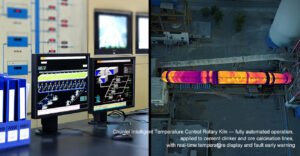
Selecting the right rotary kiln for lime calcination involves more than just determining the kiln dimensions and production capacity. Factors such as the specific limestone raw material, product quality requirements, fuel type, and production scale all play a critical role in the selection process. An improper choice of equipment can lead to issues like uneven calcination, under-burning or over-burning, excessive fuel consumption, and accelerated wear of refractory materials—all of which negatively impact both lime quality and production costs.
So, what size rotary kiln should be chosen for lime calcination? How do different fuels—such as natural gas or pulverized coal—affect the equipment? And how should one balance internal kiln temperature, material residence time, and thermal efficiency? This article explores the selection process for lime rotary kilns, covering aspects such as raw material characteristics, capacity requirements, calcination temperatures, fuel systems, kiln structure, and refractory materials, to help producers select the equipment best suited to their specific operational conditions.
What is lime calcining rotary kiln?
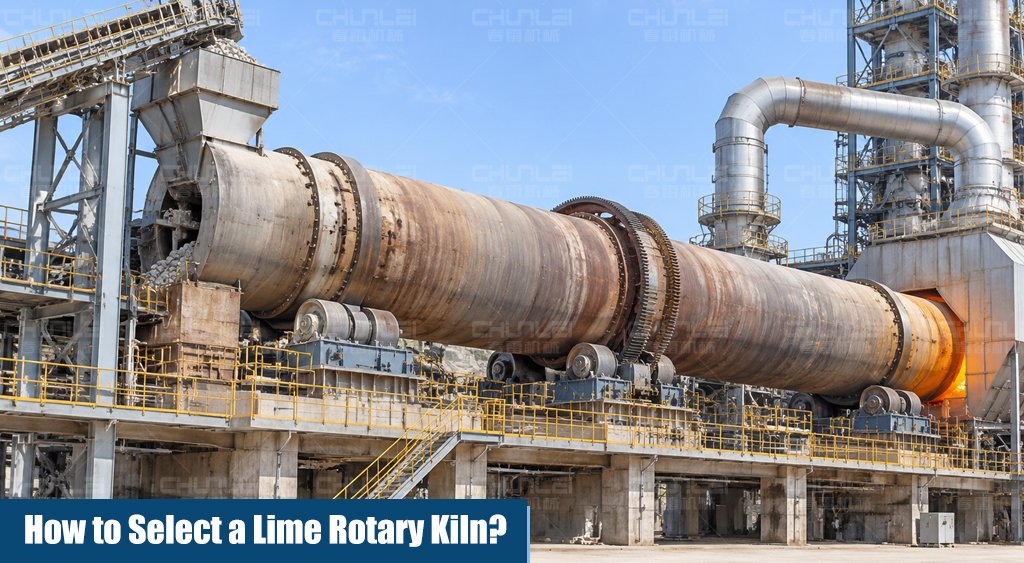
The lime calcining rotary kiln is an industrial equipment that uses high-temperature thermal energy to decompose limestone (main component CaCO₃) into quicklime (CaO) and carbon dioxide (CO₂).
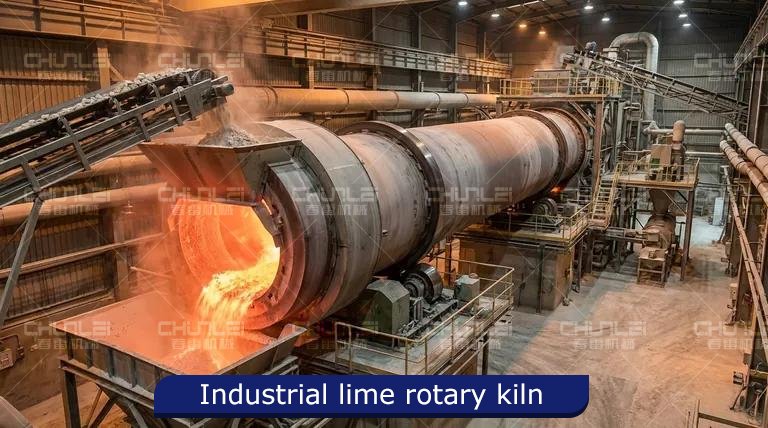
When the equipment is running, the limestone enters from the end of the kiln and slowly moves toward the kiln head due to the rotation and tilt angle of the cylinder. At the same time, it exchanges heat with the high-temperature flue gas, gradually completes preheating, decomposition and calcination, and is finally discharged from the kiln head.
Basic Operating Principle of a Rotary Kiln for Lime Calcination
A rotary kiln operates by rotating its cylindrical shell, which causes the limestone to continuously tumble and move forward, ensuring the material is thoroughly exposed to high-temperature gases.
The entire calcination process consists of three main stages:
Preheating Stage: The limestone is gradually heated, moisture is removed, and the material is prepared for the decomposition of calcium carbonate.
Calcination Stage: Once the temperature reaches the level required for decomposition, the calcium carbonate releases carbon dioxide, forming calcium oxide (quicklime).
Cooling Stage: The calcined quicklime is cooled using specialized equipment, making it easier to transport, store, and use subsequently.
It should be noted that higher temperatures are not necessarily better for calcination. If the temperature is too low or the residence time is insufficient, “under-burning” (incomplete calcination) may occur; conversely, if the temperature is too high or the residence time is too long, “over-burning” may occur, which reduces the reactivity of the lime.
Why does lime production require choosing a suitable rotary kiln?
Different lime production lines have different requirements for output, product activity and fuel consumption.
For example, the production of metallurgical lime usually requires focus on lime activity and impurity control, while the production of some industrial lime may focus more on product stability, production capacity and unit energy consumption.
Therefore, the selection of rotary kiln should not only look at the equipment specifications, but also need to consider:
Limestone particle size, purity and impurity content;
Target output per hour or day;
Calcination temperature and material residence time;
Fuel type and calorific value;
Finished product activity and residual CO₂;
Kiln lining refractory materials and service life.
What raw material conditions should be considered before selecting a lime rotary kiln?
Before selecting a kiln, it is advisable to analyze the limestone raw material. The properties of the raw material directly influence heat requirements, heat transfer within the kiln, decomposition rates, and the quality of the final product.
Chemical Composition and Purity of Limestone
A higher CaCO₃ content in the limestone generally increases the theoretical yield of quicklime per unit of raw material. However, if the raw material contains significant amounts of impurities—such as MgO, SiO₂, Al₂O₃, or Fe₂O₃—its suitability must be evaluated based on the intended end-use of the product. Key parameters to test include:
CaCO₃ content;
MgO content;
SiO₂ content;
Al₂O₃ and Fe₂O₃ content;
Moisture content and loss on ignition (LOI).
Raw material quality cannot be determined by appearance alone; equipment selection should be based on the results of chemical analysis.
The Impact of Limestone Particle Size on Rotary Kilns
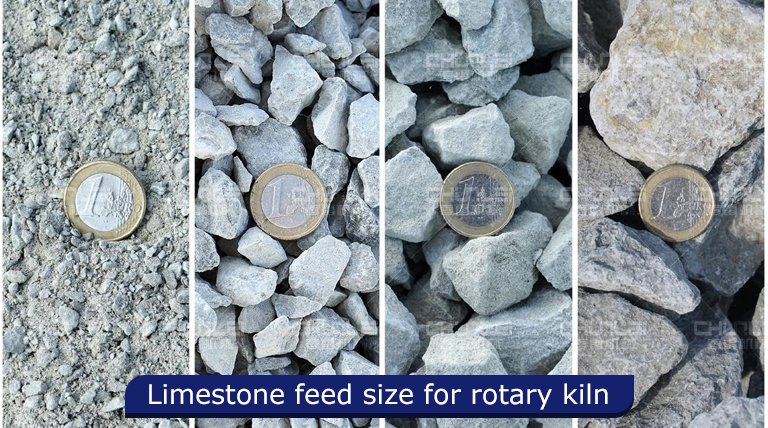
Particle size is a factor often overlooked during the selection of a rotary kiln. If the particle size is too large, heat cannot penetrate the material efficiently, which may result in a product that is calcined on the outside but still contains undecomposed calcium carbonate on the inside. Conversely, if the particle size is too small, the presence of fine powder can increase dust generation and place a greater burden on gas-solid separation systems; it may also disrupt material flow and gas distribution within the kiln. In some technical studies on lime rotary kilns, a feed size of 10–40 mm is common; however, this is merely a reference range for specific process conditions and should not be treated as a universal requirement for all rotary kilns.
Reference Table: Raw Material Properties vs. Equipment Selection
Raw Material Conditions
Potential Issues
Selection and Process Recommendations
High limestone purity
Relatively good raw material adaptability
Select kiln type based on required production capacity
Excessively large particle size
Inadequate internal calcination
Optimize crushing, screening, and residence time
Excessively fine particle size
Increased dust generation and material entrainment
Improve particle size control and dust collection
High moisture content
Additional heat consumption
Consider preheating and drying requirements
High impurity content
Potential decline in product quality
Conduct raw material analysis and proportioning tests first
Selection suggestions: Before determining the specifications of the rotary kiln, it is best to obtain representative limestone samples and complete particle size analysis, chemical composition testing and calcination tests. This is more reliable than selecting equipment based solely on designed output.
Select appropriate rotary kiln specifications based on production capacity
When choosing a rotary kiln, you must first consider the actual capacity requirements of the production line. Different production capacities have different requirements for the cylinder diameter, length, rotation speed and heating capacity of the rotary kiln. Generally speaking, the greater the output, the larger the size of the rotary kiln required. However, the size of the equipment cannot be pursued purely. It must also be judged comprehensively based on material characteristics, residence time, processing temperature and thermal efficiency.
Production Requirements
Considerations for Rotary Kiln Selection
Small-scale production
Select equipment with smaller shell diameters and lengths to control initial investment.
Medium-scale production
Match shell dimensions, rotational speed, and heating capacity to the required hourly throughput.
Large-scale production
Choose equipment with higher processing capacity, with a focus on thermal efficiency and stability during continuous operation.
High-capacity continuous production
Employ an integrated design approach that accounts for material residence time, thermal load, and operational load.
When selecting equipment, it is advisable to first determine the required daily or hourly processing capacity. Then, based on factors such as the material’s moisture content, particle size, bulk density, and specific calcination requirements, establish the appropriate equipment specifications. A well-chosen rotary kiln should not only meet current production capacity targets but also account for operational efficiency, energy consumption, and potential future expansion. This helps avoid issues such as undersized equipment limiting output, or oversized equipment leading to unnecessarily high investment and operating costs.
How to match lime calcination temperature with material residence time?
Temperature and residence time are two key factors affecting the quality of lime calcination. If the temperature control is unreasonable, even if the rotary kiln has sufficient capacity, problems such as raw burning, over-burning and unstable product activity may occur.
What temperature is required for lime calcination?
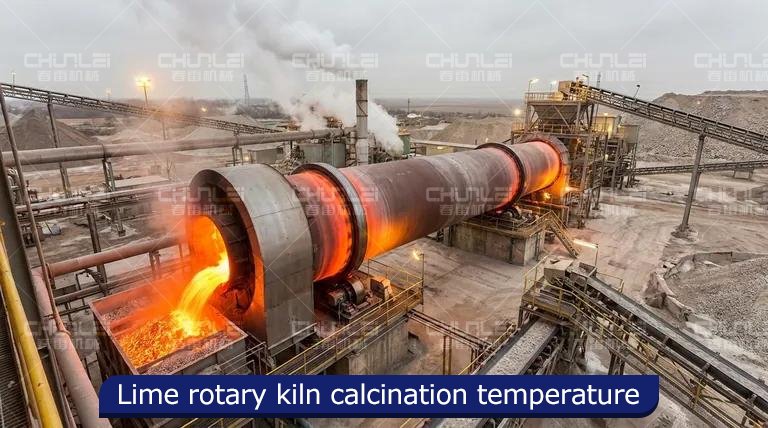
Calcium carbonate in limestone must absorb heat to decompose into calcium oxide and carbon dioxide. Industrial lime calcination typically requires temperatures in the range of approximately 900–1200°C. The actual operating temperature depends on factors such as the properties of the limestone, the type of kiln, particle size, the kiln atmosphere, and the required quality of the final product. Potential outcomes at different temperature levels:
Temperature Condition
Potential Issues
Impact on Product
Insufficient temperature
Incomplete decomposition of calcium carbonate
Increased rate of underburning
Optimal temperature
Adequate decomposition
Facilitates the production of high-quality active lime
Excessive temperature
Crystal grain growth, sintering
May lead to overburning and reduced reactivity
It is important to note that the gas temperature inside the kiln is not equal to the temperature within the limestone particles themselves. Determining whether calcination is complete requires an assessment that incorporates material temperature, residual CO₂ content, reactivity, and data from actual calcination tests.
Why is material residence time significant?
Material residence time refers to the duration from the moment limestone enters the rotary kiln until it is discharged. If the residence time is too short, the limestone may exit the calcination zone before decomposition is fully complete. Conversely, if the residence time is too long, it may lead to increased energy consumption or even over-burning. In one study concerning rotary kilns for lime production, the material residence time was approximately 5–10 hours. While this figure applies to the specific equipment and operating conditions examined in that study, for any actual project, the residence time should be calculated based on factors such as kiln dimensions, rotational speed, inclination angle, particle size, and product specifications.
How should temperature and residence time be adjusted?
It is recommended to focus on controlling the following parameters:
Combustion temperature: Adjust the fuel supply based on the thermal load in the calcination zone.
Rotary kiln rotational speed: Control the material movement rate by adjusting the rotational speed.
Kiln inclination angle: Regulate the axial movement of the material in coordination with the kiln’s rotational speed.
Fuel-to-air ratio: Ensure stable combustion and minimize incomplete combustion.
Temperature monitoring: Assess the operational status by tracking temperature variations at the kiln inlet, kiln outlet, and other critical zones.
How do different fuel types affect rotary kiln selection?
Different fuel types will directly affect the combustion system, kiln structure, refractory material configuration and operating costs of the rotary kiln. When selecting a model, you should not only consider the fuel price, but also consider the fuel calorific value, combustion temperature, feeding method, combustion stability and environmental protection requirements. Only when the fuel and equipment configuration are properly matched can the temperature in the kiln be ensured to be stable, thermal efficiency improved, and production energy consumption reduced.
The influence of different fuel types on the selection of rotary kiln
Fuel Type
Fuel Characteristics
Impact on Rotary Kiln Selection
Key Systems Requiring Configuration
Coal
High calorific value and relatively low fuel cost; however, it may have high ash and sulfur content.
Requires consideration of pulverized coal combustion efficiency, temperature distribution within the kiln, and the impact of ash on product quality.
Utilizes industrial by-product energy; however, calorific value and gas composition may fluctuate.
The combustion system must be designed based on gas pressure, calorific value, and composition to ensure stable combustion.
Specialized gas burner, pressure stabilization system, gas monitoring system.
How to reduce rotary kiln fuel consumption?
You can start from three aspects:
Optimize the burner and air ratio to improve combustion efficiency;
Use the hot air from the cooler to preheat the combustion air;
Use waste heat from kiln tail flue gas to preheat materials or combustion system.
For large lime production lines, a heat recovery system consisting of a preheater, cooler and rotary kiln can also be evaluated. Key points in selection: First determine the local fuel that can be supplied stably for a long time, and then design the combustion system based on the fuel characteristics, instead of selecting equipment first and considering the fuel later.
How should one select the appropriate kiln structure and refractory materials?
Beyond production capacity and fuel, the structural design of the rotary kiln itself and the configuration of its refractory materials significantly influence the equipment’s long-term operating costs. Which components of a rotary kiln’s structure require attention? A rotary kiln used for lime calcination primarily consists of the following components:
Kiln shell sections;
Support mechanisms;
Riding rings (tires) and support rollers;
Drive system;
Kiln inlet and outlet seals;
Burner;
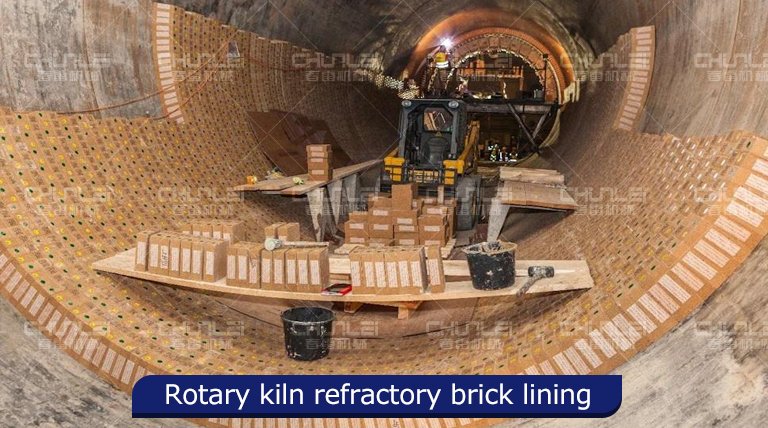
Refractory lining;
Feeding and discharging systems.
These structural components must function in coordination with one another. For instance, deformation of the kiln shell or improper installation of the support rollers can lead to abnormal contact with the riding rings, equipment vibration, and increased mechanical wear. Similarly, poor sealing can result in air leakage, which disrupts the thermal regime inside the kiln.
How should refractory materials be selected?
Refractory materials are primarily used to protect the shell of a rotary kiln, reducing the impact of high temperatures on its steel structure. Since operating conditions vary across different zones, it is not appropriate to use the same type of refractory material throughout.
Kiln Zones
Primary Operating Environment
Material Selection Considerations
Preheating Zone
Gradually increasing temperature; exposed to flue gases and dust
Thermal shock resistance, wear resistance
Calcination Zone
High temperature; significant thermal load
High-temperature performance, erosion resistance
Transition Zone
Pronounced temperature fluctuations and thermal stress
Thermal stability, structural strength
Cooling Zone
Material abrasion and mechanical wear
Wear resistance, thermal shock resistance
Common refractory materials include high-alumina refractory bricks, magnesia-based or magnesia-alumina-based refractories, as well as refractory castables designed for specific applications. The final selection of materials should be based on factors such as the temperature inside the kiln, exposure to alkaline or other chemical corrosion, material abrasion, thermal shock conditions, and the intended construction method.
Why can’t we just look at the price of refractory materials?
In order to reduce initial investment, some production lines will choose lower-priced refractory materials. However, if the materials cannot adapt to the actual temperature and chemical environment, cracking, peeling and local wear may occur. After the refractory material is damaged, not only does the kiln need to be shut down for repairs, but it may also cause local overheating of the cylinder, increasing the risk of equipment maintenance. Therefore, it is recommended to compare from the following aspects:
Whether the maximum operating temperature meets the working conditions;
Whether the thermal shock stability meets the requirements;
Whether it can resist material wear and chemical erosion;
Whether the masonry method and expansion joint design are reasonable;
Whether expected service life and maintenance costs match.
How to reduce lime calcination costs through thermal efficiency?
During the lime calcination process, the lower the thermal efficiency, the more serious the waste of fuel, and the higher the production cost. To reduce calcination costs, the key is to reduce heat loss and improve fuel utilization. You can start from the following aspects:
Optimize the combustion system: Reasonably control the ratio of fuel and air to ensure full combustion of fuel and reduce energy waste.
Strengthen kiln insulation: use high-quality refractory materials, promptly repair damage to the kiln lining, and reduce heat dissipation in the kiln body.
Waste heat recovery: Use the waste heat of high-temperature flue gas and finished lime to preheat the combustion air and raw materials entering the kiln.
Control the calcination temperature: Adjust the calcination temperature and residence time according to the characteristics of the raw materials to avoid raw and over-burning.
Optimize the particle size of raw materials: Control the particle size and moisture of limestone to ensure uniform heating and improve calcination efficiency.
Do a good job in equipment maintenance: Regularly check burners, fans and sealing devices to reduce air leakage and equipment operation losses.
Summary: To improve the thermal efficiency of lime kilns, the focus is on full combustion, reducing heat dissipation, recovering waste heat and stabilizing calcination. Only by improving energy utilization can fuel consumption and production costs be reduced while ensuring lime quality.
Common misunderstandings in lime calcining rotary kiln selection
When actually selecting equipment, some problems may not seem major, but they may directly affect production stability later on.
1. Only look at the price of the equipment and do not consider long-term operating costs The equipment purchase price is only the initial investment, and subsequent fuel consumption, refractory material replacement, maintenance costs and downtime losses are equally important.
Suggestion: Comprehensively compare equipment investment, unit product energy consumption and long-term maintenance costs.
2. Ignore changes in limestone particle size and raw materials Limestone may vary in particle size, purity and moisture from batch to batch. If changes in raw materials are not considered in advance, it is easy to cause instability in the temperature and degree of calcination in the kiln.
Recommendation: Conduct raw material testing before selection, and determine crushing, screening and feeding plans based on the actual particle size range.
3. Only increase the calcination temperature without adjusting the residence time Increasing temperature does not necessarily improve calcination quality. If the material is heated unevenly, raw burning may still occur; if the temperature is too high, overburning may occur.
Recommendation: Adjust the temperature, rotation speed, material residence time and fuel supply in combination.
4. Ignore the matching of preheater and cooler Only focusing on the rotary kiln main machine and ignoring the preheating and cooling system may lead to insufficient utilization of waste heat and increase fuel consumption.
Suggestion: Design from the perspective of the entire calcining production line, rather than considering the kiln body alone.
Rotary Kiln Thermal Efficiency FAQ
Q1: What is the working temperature of lime calcining rotary kiln?
A: Industrial lime calcination usually requires high temperature conditions of about 900–1200°C. The actual temperature needs to be determined based on the raw material particle size, limestone properties and product quality requirements.
Q2: What is the general residence time of materials in lime rotary kiln?
A: Different equipment and processes vary greatly. The material residence time of some industrial rotary kilns is about 5–10 hours, which needs to be calculated based on the kiln length, rotation speed, inclination angle and material properties.
Q3: Is it better to use natural gas or pulverized coal in the lime calcining rotary kiln?
A: Both fuels have their own characteristics. Natural gas is generally easier to control combustion, while pulverized coal requires supporting pulverizing and conveying systems. The final choice should be based on local fuel prices, supply stability and environmental requirements.
Q4: How to judge whether there is insufficient calcination in the lime rotary kiln?
A: It can be judged by the residual CO₂ of the finished product, activity level, sampling analysis and temperature records in the kiln. You cannot judge based solely on the appearance of the finished product or the temperature of the kiln head.
Q5: What are the most important parameters when choosing a lime calcining rotary kiln?
A: There is no single parameter that determines whether a device is suitable. Limestone properties, production capacity, temperature control, material residence time, fuel system, thermal efficiency and refractory materials should be considered comprehensively.
Summary
When choosing a lime calcining rotary kiln, you should not just look at the size and price of the equipment. The key is to see whether it is suitable for your production situation. For example, what are the limestone raw materials, how many tons need to be burned every day, how to choose the fuel, and whether the calcining temperature and time are sufficient? These must be considered in advance.
If you are preparing to build a lime production line, or if the existing rotary kiln has problems such as high energy consumption and uneven calcination, please contact us. Tell us your raw material situation and output requirements, and we can help you analyze the process and recommend the appropriate rotary kiln configuration to avoid wrong equipment selection and extra money later.
Choosing the right rotary kiln is the foundation of a successful calcination project—whether you’re processing mining ores, cement clinker, lime, or alumina, the wrong kiln type can lead to low production efficiency, high energy waste, frequent e...
The choice between a direct-heated rotary kiln and an indirect-heated rotary kiln directly impacts product quality, fuel consumption, process control, and equipment service life. Making the right selection requires more than just considering the ...
A rotary kiln may look like nothing more than a large, continuously rotating cylinder, but keeping it running stably is far from simple. Even a slight misalignment can lead to uneven contact between the riding ring (tire) and the support rollers,...
If you operate a cement, mining, lime, or metallurgical calcination plant, you’ve likely been struggling with this problem for years: the temperature in your rotary kiln is constantly fluctuating. When temperatures are too high, fuel is wasted; w...
 Chunlei Rotary kiln