What Makes Chunlei’s Intelligent Temp Control Kiln Stand Out?
The type and properties of your calcination material are the first and most critical factor—different materials require different rotary kiln designs, especially in terms of temperature resistance, kiln body structure, and refractory materials. Here are the most common scenarios and matching suggestions:
1. ±5℃ Precise Temp Control — No More Wasted Fuel or Bad Batches
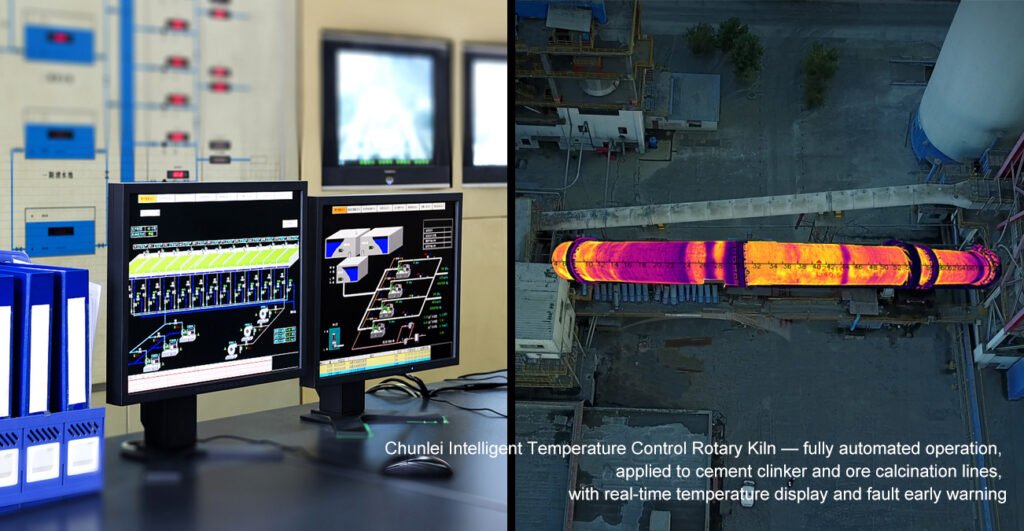
We fitted this system with high-precision infrared temp sensors and multiple monitoring probes, covering every key zone of the kiln — preheating, calcining, and cooling. It tracks temperature in real time, then automatically tweaks the burner output, kiln rotation speed, and air flow to keep fluctuations locked within ±5℃.
No more overheating that wastes fuel, no more under-calcined materials that force reworks. This direct control slashes your total energy use by 15% and pushes your product qualification rate above 99.5% — that’s less waste, more consistent output.
This precise control avoids excessive fuel consumption caused by overheating and rework costs from under-calcined materials, directly cutting overall energy consumption by 15% and increasing product qualification rate to over 99.5%. a high-temperature resistant refractory lining (1200-1600℃) and an advanced combined scale sealing device (leakage coefficient <10%), which effectively prevents air leakage and ensures stable ore roasting effect, and its adjustable rotation speed (0.44-2.44 r/min) can be flexibly adjusted according to ore types.
2. Smart Auto Operation — Less Labor, Fewer Mistakes
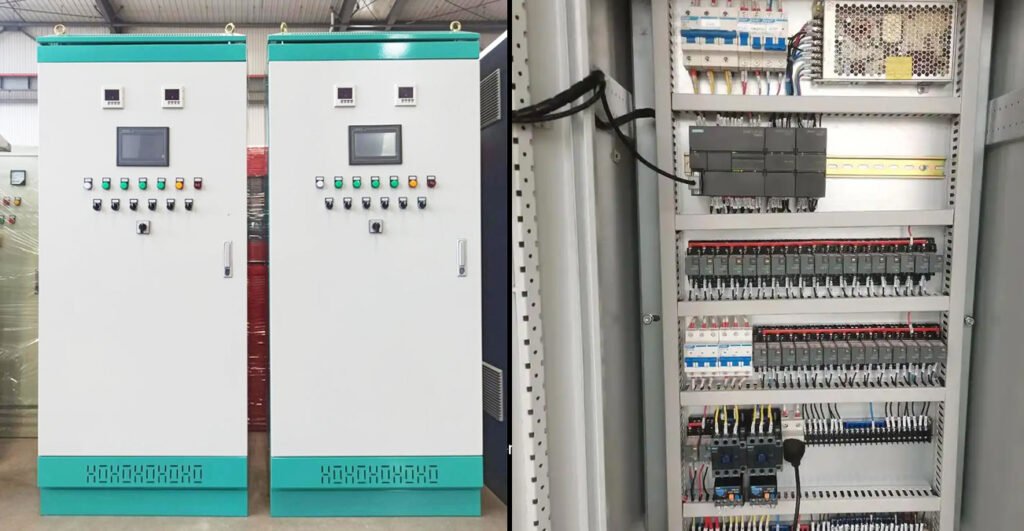
Our intelligent control cabinet is super easy to use: one key to start or stop, fully automatic running, and it even diagnoses faults on its own. Your operators can watch all key stats — temperature, speed, pressure, fuel use — right on the touchscreen, and it alerts you instantly if something looks off.
You don’t need staff hovering over the kiln nonstop, which cuts your labor costs by 30%. And best of all, you eliminate those random quality dips that come from human error — the system runs consistently, every single day.
3. Steady Running — Longer Equipment Life
When the temperature stays consistent, there’s less thermal stress wearing down the kiln shell, refractory bricks, and transmission parts. That means fewer maintenance stops and less downtime. We also use wear-resistant, high-temp parts to build this kiln, so its total service life gets extended by 2-3 years — saving you even more on long-term operating costs.
4. Remote Monitoring & Data Logging — Upgrade to a Smart Plant
You can check the kiln’s status and adjust settings remotely from your phone or tablet, no matter where you are. The system also automatically saves all operating data — temperature curves, fuel use, daily output — so you have hard numbers to optimize production and track costs. It’s the perfect upgrade to turn a traditional calcination plant into a smart, efficient operation.
 Chunlei Rotary kiln